
African Violet (Saintpaulia ionantha) is a flowering houseplant with flowers that come in a variety of colors. The flowers bloom all year long and are great for adding a pop of color to your house or office. African Violet is a humid-loving plant so it will do well in bathrooms with windows. It is also an easy-to-grow flowering houseplant. Here is a beginner’s guide on how to care for your African Violet at home.
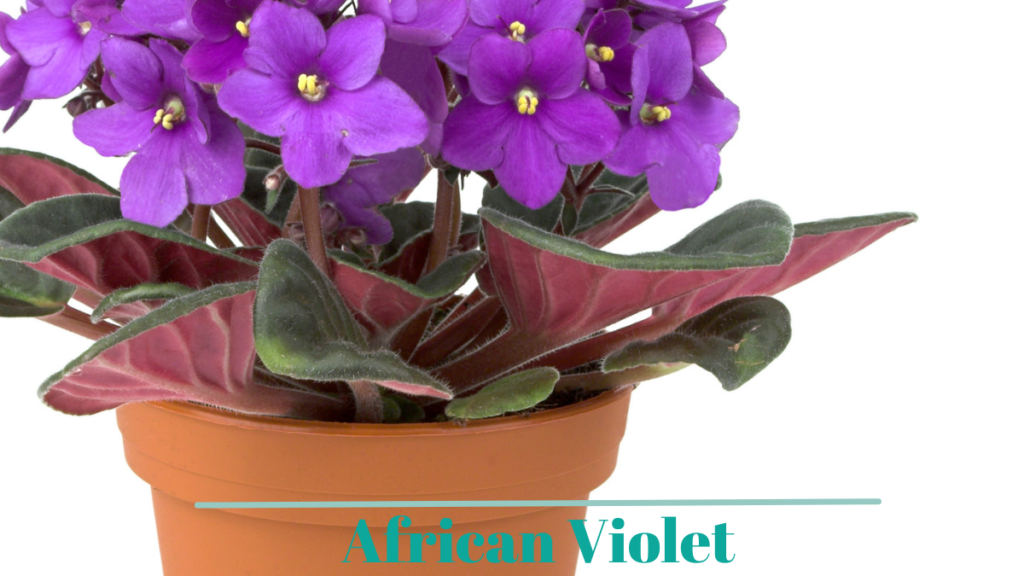
African Violet Houseplant Care at a Glance
| Name | African Violet |
| Scientific Name | Saintpaulia spp. |
| Care Level | Easy |
| Light | Bright, Indirect Light |
| Daytime Temperature | 70 to 80 F (21-26C) |
| Night Time Temperature | 60 to 70 F (15-21C) |
| Water | Moderate Water |
| Humidity | High Humidity |
| Potting | Well-draining, organic, African Violet potting mix |
| Fertilizer | Once every 3 months |
| Toxic to Pets and Humans | Non-toxic to dogs and cats |
African Violet: Common Names
African Violet is also called Cape Marigold.
African Violet: Size
The size of your African Violet will depend on the variety. The micro-miniature African Violet varieties will grow to less than 3 inches in diameter. Miniature African Violet varieties will grow to 3-6 inches in diameter. And the standard African Violet varieties will grow to 8 to 16 inches. The large African Violet varieties will grow to more than 16 inches.
African Violet: Toxic to Cats?
African Violets are non-toxic to cats.It is safe to have African Violet in your house around your cats.
African Violet: Toxic to Dogs?
African Violets are non-toxic to dogs. It is safe to have African Violet in your house around your dogs.
Light
African Violet: Sun or Shade?
African Violet grows best in bright, filtered light. Just make sure it’s not getting direct sunlight. You can filter the sun with sheer curtains and sheer blinds. Your African Violet will do well under fluorescent light (12 inches above the plant).
Water
How Often Should You Water Your African Violet?
Water your African Violet when the soil feels dry. The best way to tell when it is time to water your African Violet is to feel the soil. Stick your finger in the soil 1 inch deep. Don’t let the water get on the leaves or the flowers of your African Violet. It’s best to water from the bottom.
How Do You Know When to Water Your African Violet?
Water your African Violet when the soil feels dry. The best way to tell when it’s time to water is by sticking your finger into the soil. Stick your finger in the soil 1 inch deep. If the soil feels dry, then it’s time to water your African Violet.
Water can damage the leaves of your African Violet. It’s best not to let water get on the flowers or the leaves of your African Violets. Water from the bottom.
What Type of Water Should You Use When Watering Your African Violet?
Your African Violet can be watered with tap water but be mindful of the water temperature that you are using to water your African Violet. Don’t use straight cold water from the tap to water your African Violet. African Violet prefers cool water that is not hot and not cold. When you turn on the cold water from the faucet add a little bit of warm water. You can also get to this ideal temperature by filling a watering can or pitcher with water and leaving it out overnight until the water is at room temperature.
How Do You Make Sure There is Proper Drainage for Your African Violet?
Your African Violet Good drainage is important, you don’t want your African Violet to sit in soggy soil. Make sure there are drainage holes at the bottom of the pot. After watering your African Violet and you see water draining out of the pot’s drainage holes, make sure you empty out the accumulated water in the saucer. Don’t let your African Violet’s pot sit in this puddle of water. It will cause root rot!
Do You Need to Mist Your African Violet?
Your African Violet is a houseplant that like humidity. You should increase indoor humidity. Turn on the humidifier. Keep African Violet in a saucer filled with water. But make sure the pot is elevated with pot feet or pebbles so your African Violet is not sitting directly on the water. You can also keep your African Violet in a room with high humidity such as a bathroom. Just don’t mist your African Violet because you don’t want to wet the leaves.
Soil
What Type of Potting Mix is Best for Your African Violet?
Your African Violet needs a well-draining, organic African Violet potting mix.
How Do You Know When To Repot Your African Violet?
Repot your African Violet when it outgrows its current pot. Repot your African Violet in a container with a diameter 1 inch larger than the current pot. African Violets have a compact root system so it prefers to be in small, shallow containers.
Fertilizer
Do You Need to Fertilize Your African Violet?
Your African Violet should be fertilized once every 3 months.
What Fertilizer Should You Use on Your African Violet?
Use a balanced fertilizer on your African Violet.
Propagation
How Do You Propagate Your African Violet?
Your African Violet African Violet Plant is easy to propagate. You can propagate your African Violet plant by leaf cutting. Below are steps on how to propagate African Violet Plant by leaf cutting.
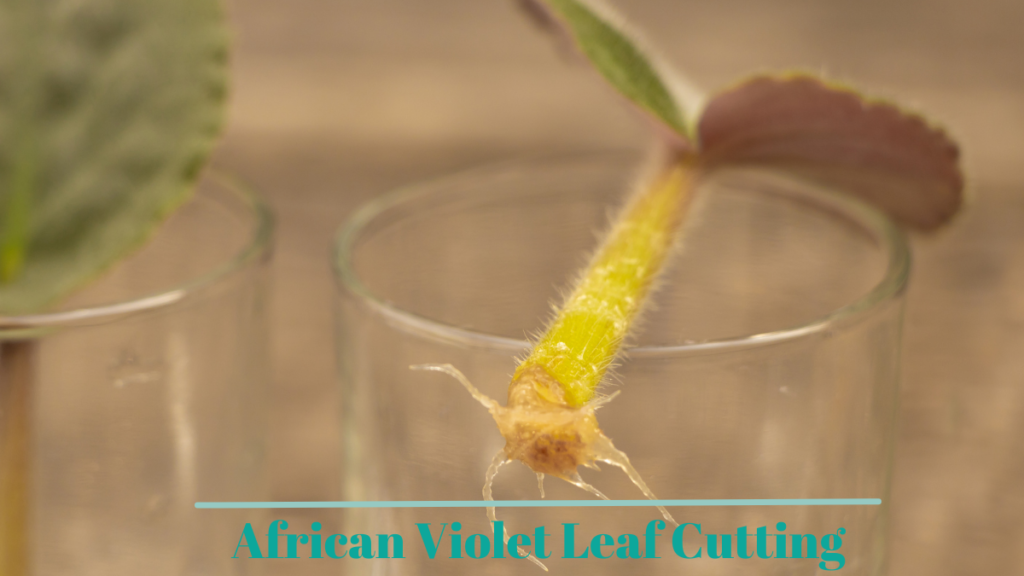
1. Take a Leaf Cutting of your African Violet Plant
Cut a mid-sized leaf from your African Violet and include 1-2 inches of leaf stalk.
2. Plant the Your African Violet Leaf
Dip the leaf stalk into the rooting hormone and then plant it into a pot that is a soil mixture of vermiculite and perlite (50/50 ratio). Make sure the soil mixture is damp by watering it thoroughly before planting the leaf stalk. You can plant more than one leaf in the pot.
3. Repot Your African Violet in its Permanent pot
The roots of your African Violet will grow in 2-4 weeks. You will see the baby leaves will be about 1 inch long. When that happens, you can repot your African Violet to its permanent container.
4. Place New African Violet Plant in a Spot with Bright Indirect Sun
Place your new African Violet plant in a spot with bright indirect sunlight. Don’t put it in direct sunlight.
Common Problems of African Violet Care
The most common problems that affect African Violet are mealy bugs, gray mold, and whitish spots on leaves.
African Violet Problem: Fluffy White Growth In Between the Leaves and Stems
Problem: There are fluffy white growths in between the leaves and stems of your African Violet.
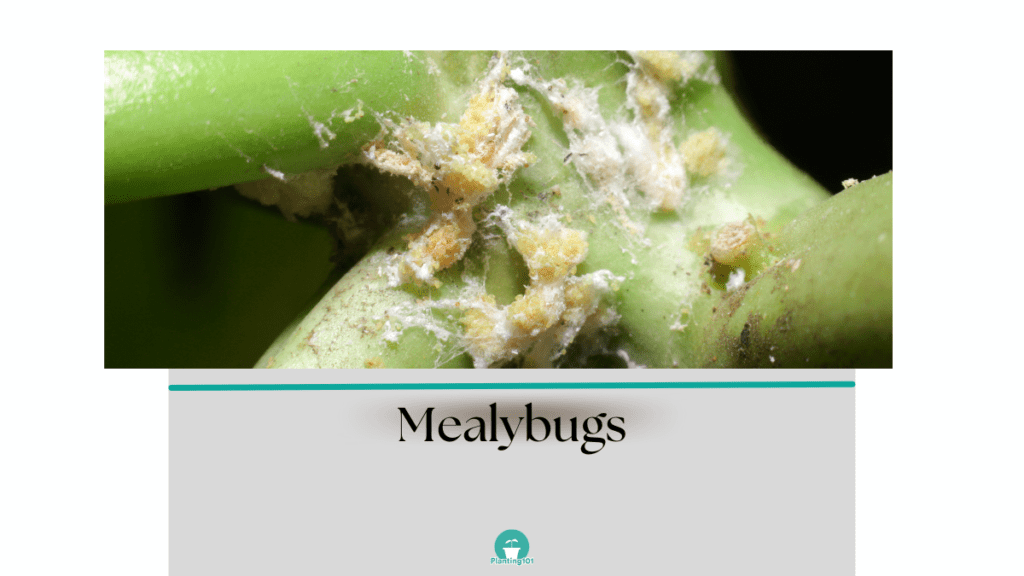
Cause: Mealybugs are causing the fluffy white growth on your African Violet. It is a common houseplant disease.
Solution: To get rid of mealybugs on your African Violet, wash your plant with water. You can also use soapy water. Spraying rubbing alcohol on affected areas can also get rid of mealybugs. Horticultural oil and insecticidal soap are also effective in getting rid of mealybugs.
Check out our article on how to make your own homemade pesticides using baby shampoo: How to Make Horticultural Oil and How to Make Insecticidal Soap
African Violet Problem: There are Whitish Spots on the Leaves of Your African Violet
Problem: There are whitish spots on the leaves of your African Violet.
Cause: The whitish spots on the leaves of your African Violet are caused by cold water. If cold water drips on the leaves of your African Violet, white rings and lines can develop on the leaves of your African Violet.
Solution: Water your African Violet from the bottom so you don’t wet the leaves. Make sure you don’t water with cold water, lukewarm water is ideal.
African Violet Problem: There are brown spots on the Leaves or Flowers of Your African Violet
Problem: There are brown spots on the leaves or flowers of your African Violet.
Cause: The brown spots are a telltale sign of a gray mold fungus infection caused by Botrytis cineria. This is a common houseplant disease.
Solution: Remove infected parts immediately to prevent the fungus infection from spreading to other parts of the plant. You can use baking soda spray to prevent future outbreaks.
Cleaning Houseplants
What’s the best way to clean the leaves of your African Violet?
African Violet has hairy leaves so the best way to clean the leaves of your African Violet is to use a makeup brush to gently brush off dirt and dust. It’s best not to wet the leaves of your African Violet since water can damage the leaves.
You May Also Be Interested In:
How to Take Care of Haworthia (infograph)