
Why does one hydrangea bloom like crazy while another barely flowers at all? Most of the time, it comes down to timing. Skip watering during one key month, or fertilize too late, and your hydrangeas will definitely let you know.
If you’ve ever looked at your hydrangea and thought, “What am I supposed to be doing with this right now?” — you are definitely not alone.
Below, I’m giving you a complete hydrangea care calendar, month by month, so you’ll know exactly what to do throughout the year for healthier plants, bigger blooms, and less stress.
We’re covering pruning, fertilizing, watering, winter prep, and the biggest mistakes gardeners make during each season.
And honestly, once you understand the yearly rhythm of hydrangeas, they become so much easier to grow.
January
January is really the quiet season for hydrangeas. Your plants are dormant right now, especially in colder climates, and honestly there’s not much you need to do. This is mostly the month to leave them alone.

I like to keep the dried blooms on the plants through winter because they actually help protect developing buds from cold weather. They also look really pretty covered in frost or snow.
The only thing I really check for in January is broken branches after snow or ice storms. Heavy wet snow can weigh down stems, so if you notice large piles sitting on the plant, gently brush them off. Otherwise, let your hydrangeas rest.
February
By February, spring starts feeling a little closer even though the garden still looks asleep. This is a good time to clean up around the base of the plant and check your mulch levels.
March
March is when gardening season slowly begins waking up. You’ll probably start seeing buds swelling and some signs of life returning. This is a good time to clean out dead stems.
But this is where you want to be careful. If you have bigleaf hydrangeas or oakleaf hydrangeas, don’t be a busy body and start pruning because many of those bloom on old wood. If you prune now, you could accidentally remove this year’s flower buds.
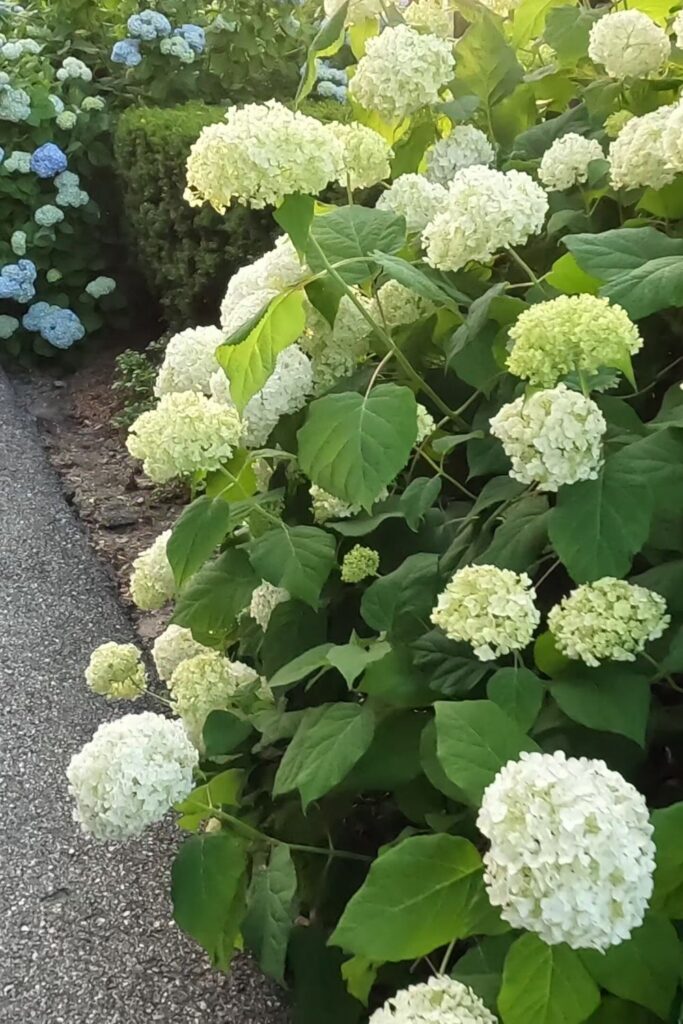
Panicle and smooth hydrangeas are different though. Those can handle pruning in early spring and often bloom even better because of it. But if you’re not sure what type of hydrangea you have, it’s better to play it safe and not prune at all.
April
April is when hydrangeas really wake up. Fresh green leaves start emerging and suddenly the garden starts looking alive again. This is one of the most important months for feeding your plants. I fertilize using a slow-release balanced fertilizer in spring to support healthy growth and blooms.
You don’t want to over-fertilize though. Too much nitrogen can give you giant leafy plants with fewer flowers, and nobody wants that.
This is also a good time to refresh mulch around the base. Mulch helps retain moisture and keeps the roots cooler once summer heat arrives.
May
By May, hydrangeas are actively growing fast. This is such an exciting month because everything suddenly gets lush and green. But depending on where you live, late frosts can still happen, and they can damage flower buds.
If cold temperatures are predicted, cover them overnight with sheets or frost cloth. It can make a huge difference in preserving blooms.
One of the biggest things your hydrangeas need in May is consistent watering, especially as temperatures start warming up. Hydrangeas love moisture, so keeping the soil evenly damp can help prevent stress and encourage larger flowers later in the season.
Adding a layer of mulch around the base of the plant can also help hold in moisture and keep the roots cool.
This is also a great time to fertilize your hydrangeas if you didn’t do it in April.
June
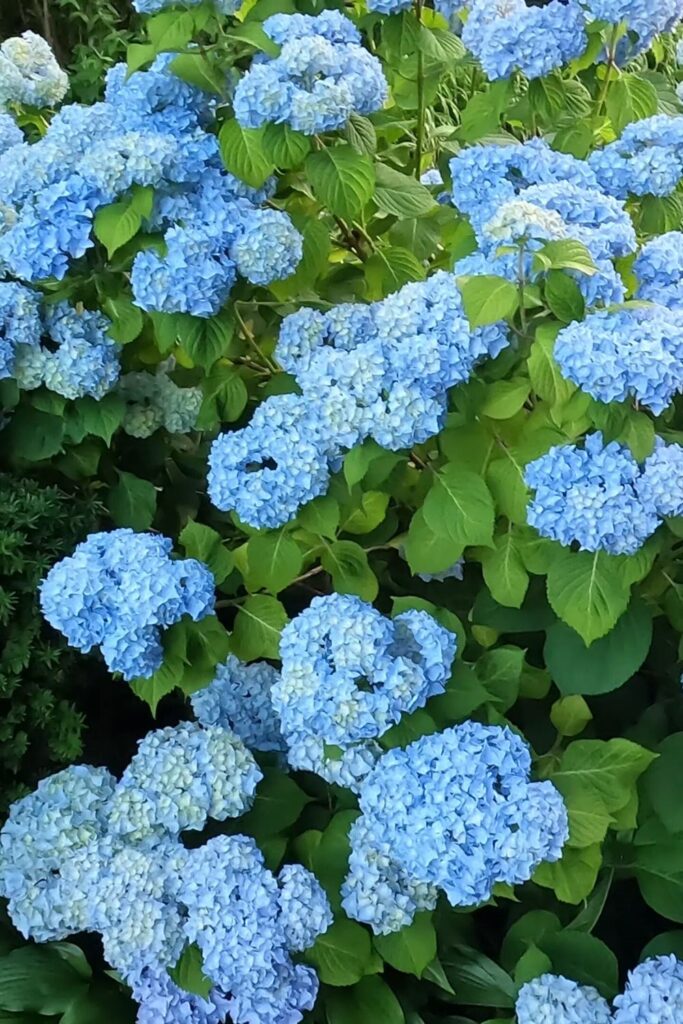
June is when many hydrangeas begin blooming, and honestly this is where the magic starts. You’ll start seeing those beautiful flowers opening up and transforming the garden.
At this point the main job is watering deeply and consistently. Hydrangeas need a surprising amount of water during warm weather. Morning watering is usually best because it gives the leaves time to dry during the day and helps prevent fungal issues.
If your hydrangeas droop during hot afternoons, don’t panic right away. It’s perfectly normal for Hydrangeas to droop when it’s hot. Sometimes they wilt temporarily in the heat and perk back up later in the evening once temperatures cool down.
July
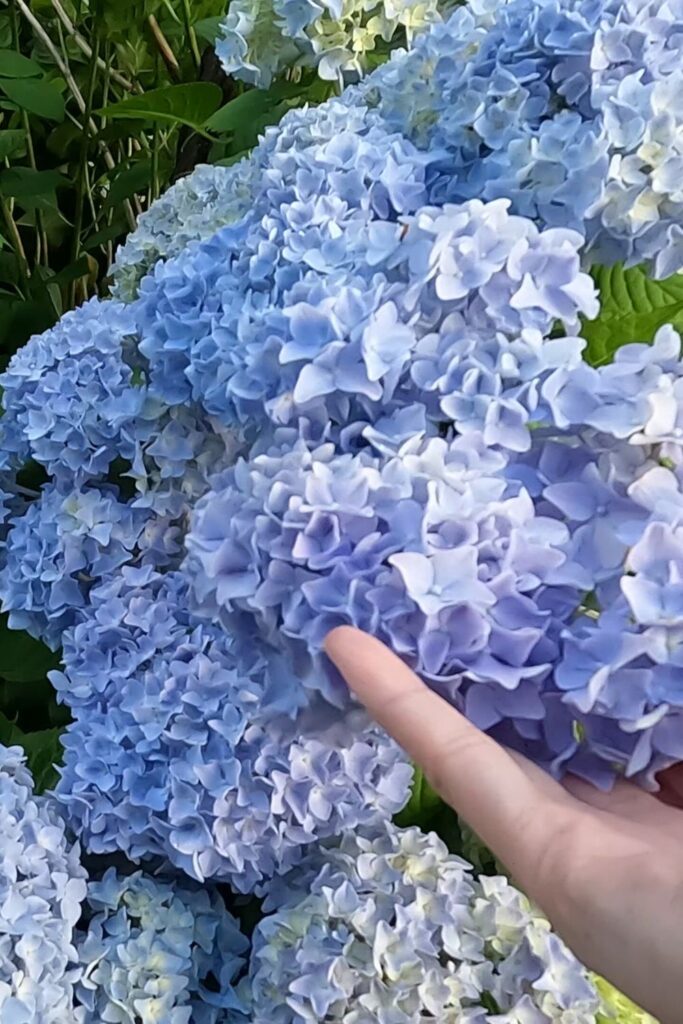
July is peak hydrangea season. This is usually when gardens look their best. Huge blooms, lush leaves, and tons of color everywhere.
During July, I mostly focus on maintenance. I keep watering deeply, remove damaged blooms if needed, and watch for heat stress. Hot weather can cause crispy leaf edges or faded flowers, especially if plants get too much harsh afternoon sun.
This is also a wonderful time to cut blooms for arrangements inside the house. Hydrangeas dry beautifully too, so I often leave some flowers on the plant to mature naturally for dried arrangements later.

August
August is an important month because this is when many gardeners accidentally prune off next year’s flowers. For hydrangeas that bloom on old wood, like bigleaf hydrangeas, next year’s buds may already be forming now.
That means heavy pruning in late summer can remove future blooms before you even realize it. So during August, I mostly leave the plants alone except for watering and removing dead stems if necessary.
I also stop fertilizing around this time because I want the plant to begin slowing down naturally before fall.

September
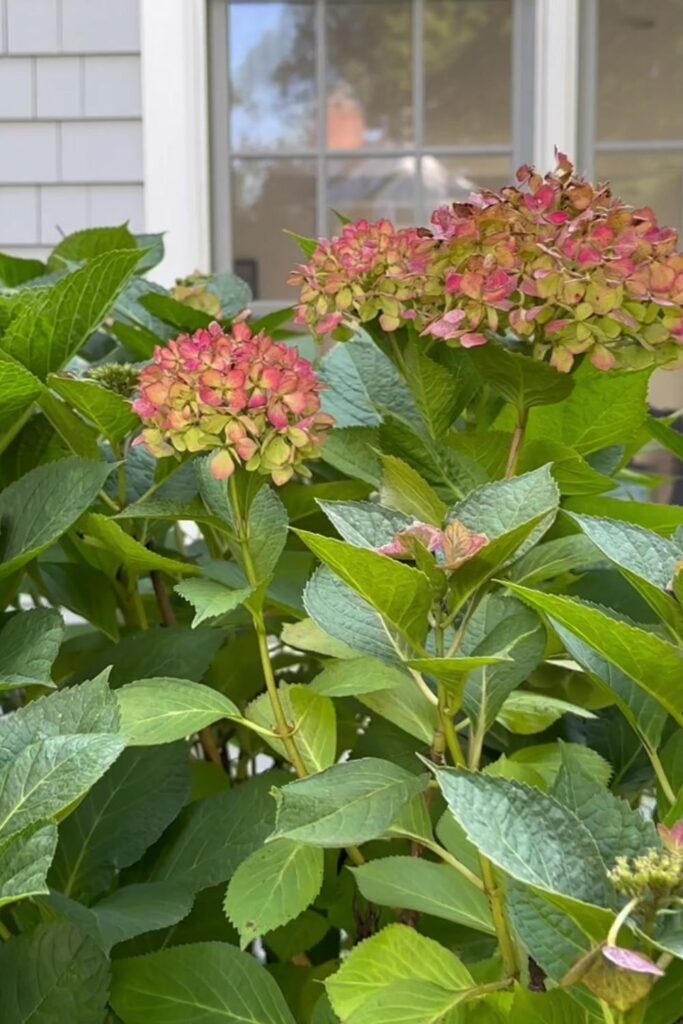
September is one of my favorite months in the garden. Hydrangea blooms often start developing those gorgeous vintage tones with hints of green, burgundy, dusty pink, and antique blue.
This month is more about preparing for fall. Continue watering during dry periods, but otherwise the plant is starting to wind down for the season.
Early fall is also one of the best times to plant hydrangeas because the soil is still warm while the air temperatures are cooler. That combination helps roots establish with less stress.
If you want to propagate hydrangeas, September is a great time to do it. I have easy step by step article on how to propagate hydrangeas.

October
By October, winter preparation begins. I like adding fresh mulch around the base of the plant to help insulate the roots before colder temperatures arrive.
I usually leave most blooms on the plant through fall and winter because they provide winter interest and help protect developing buds. Unless you know your hydrangea blooms on new wood, avoid cutting the whole thing back.
November
November is when colder climates really start preparing for winter. If you live somewhere with harsh winters, this is the time to add extra protection around sensitive hydrangeas.
Winter winds and freeze-thaw cycles often cause more damage than actual cold temperatures. Adding mulch around the roots and sometimes even using burlap barriers can help protect the plants through winter.
December
And finally, December is the resting season again. There’s not much active work to do now, and honestly that’s one of the things I love about gardening. Every season has its purpose.
Winter is the time to slow down, dream about spring, research new plants, and plan next year’s garden. Hydrangeas really teach patience because even when they look completely lifeless in winter, they come roaring back once warm weather returns.
And that’s your complete hydrangea care calendar from January through December. Once you understand the yearly rhythm of hydrangeas, they become so much easier to grow and care for.
Get Your FREE Hydrangea Care Tracker Printable

Sign up once and you will get access to ALL exclusive content on this website. After unlocking the printable, just save the printable image and then print it. Use it to keep track of your hydrangea care! I hope you like it!
