

If you are a lazy gardener, you have probably looked at peonies and thought, those are stunning, but there is no way I have the time or energy for that.
I thought the exact same thing. And then I planted my first one over a decade ago, and it changed my mind.
The amazing thing about peonies is they do not just survive on neglect, they thrive on it. For more than ten years, I have done the bare minimum, and every single spring, without fail, they come back bigger, more lush, and more breathtaking than the year before.
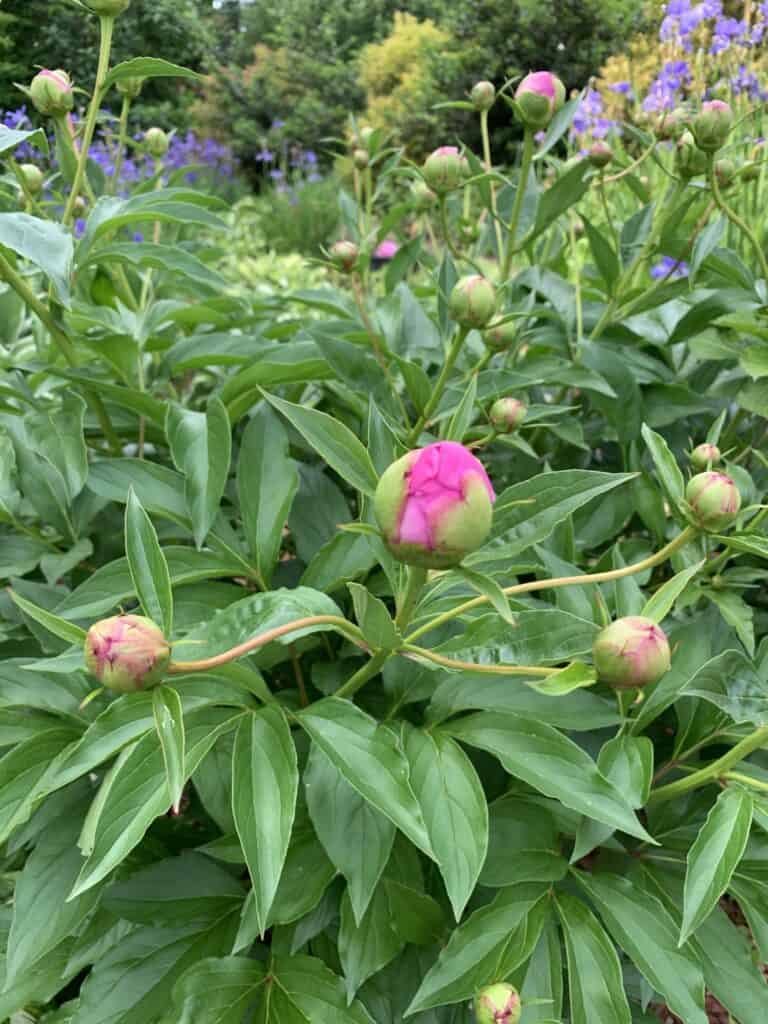
People ask me what my secret is. And honestly? My secret is doing almost nothing.
So if you have been eyeing peonies but talking yourself out of it because you assumed they were too fussy or too complicated, you need to read this. By the end, I think you are going to wonder why you waited so long to plant them.
Peonies are True Perennials
When you plant a peony, you are not making a seasonal commitment. You are not even making a five or ten year commitment. You are making a lifetime commitment.
There are peonies growing in gardens across the country that were planted before World War Two. Some that have been in the ground for over a hundred years, still blooming every spring without anyone doing anything special to keep them alive. That is not an exaggeration. That is just what peonies do.

For a lazy gardener, this is almost too good to be true. I don’t know about you, but I’m definitely not a plant-and-replant kind of person. I don’t want to have to divide plants every few years. I want a true set it and forget it plant.
Peonies are that plant. In fact, the biggest mistake you can make with a peony is moving it. They hate being disturbed. They want to stay exactly where you plant them and be left alone. Which is a perfect match for lazy gardeners.
So when you plant your peony, choose the spot carefully. That plant could be blooming in that exact spot long after you are gone.
Get the Planting Location Right
There are a few non-negotiables when it comes to where you plant peonies. Get these right from the start, and you will never have to troubleshoot your peonies again. Get them wrong, and you will spend years wondering what you are doing wrong.
Peonies need sun. Not a little sun, not dappled shade, not the spot on the north side of your house that gets a couple hours of light in the afternoon.
We are talking a minimum of six hours of direct sunlight per day, and honestly, the more the better. Full sun is where peonies truly thrive and produce the most abundant blooms.
Now I know some gardening resources will tell you that peonies can tolerate partial shade, and technically, that is true. They will survive in partial shade. But surviving and thriving are two very different things.
A peony in too much shade will put out weak growth, sparse blooms, and will be far more susceptible to the fungal diseases. For a lazy gardener who does not want to be troubleshooting problems, just give them the sun they want from the beginning.
The other thing to think about with location is air circulation. Peonies do not like to be crammed in tight between other plants or up against a wall or fence with no airflow.
Good air circulation around the plant keeps the foliage dry and dramatically reduces the risk of botrytis blight, which is the main disease. So give them a little breathing room. Do not overcrowd them.
Now let’s talk about drainage, because this is just as important as sun. Peonies cannot sit in waterlogged soil. Their roots will rot. If you have an area of your garden that stays wet after rain, that holds puddles, that feels soggy when you step on it — that is not the spot for a peony.
Find a spot where your peonies will be happy and you are setting them up for a lifetime of success with almost no effort from you going forward.
Don’t need to water
This is one of the main reasons why I love peonies. Once your peony is established, and by established I mean after its first full growing season in the ground, it becomes drought tolerant. The root system goes deep, the plant goes dormant over winter, and it gets everything it needs from natural rainfall alone.
Think about that for a second. A plant that waters itself. That is the dream.
Now, for newly planted peonies, you do want to give it some attention. Water it regularly while the roots are getting settled and spreading out. But after that first year? Step back. In my more than ten years of growing peonies, I have watered mine during maybe two or three serious droughts. The rest of the time, rain water is enough.
The only time you really need to think about watering established peonies is during prolonged dry spells in summer, especially when the plant is forming buds.
Consistent moisture during bud development can make a difference in bloom size. But even then, we are talking about occasional deep watering, not a daily schedule.
Mulch once a year
Here is a task that takes about ten minutes once a year and pulls its weight more than almost anything else you can do for your peonies. And the good news is, once you do it, you can forget about it for another twelve months.
Mulching your peonies does three things simultaneously. It holds moisture in the soil so the plant stays hydrated longer between rain. It suppresses weeds, so you are not out there pulling things up around your plants every week.
And it regulates soil temperature, keeping the roots cooler in summer heat and protecting them from dramatic temperature swings in winter.
The timing matters a little here. You want to mulch in late spring, after the shoots have already pushed up through the ground. If you mulch too early you can actually insulate the soil and slow down that emergence, which delays your blooms.
Spread about two to three inches of mulch around the base of the plant. Wood chips, shredded bark, straw, all of these work well. The one thing to be careful about is keeping the mulch away from the crown of the plant.
The crown is where the stems meet the soil, and that area needs airflow. Piling mulch right up against it can cause rot and can also effectively deepen your planting depth which can prevent it from properly blooming.
So a little gap around the crown, a couple inches of mulch spreading out from there, and you are done for the year.
Fertilizer is optional
I want to say that again because it might be the most liberating sentence in this entire video. Fertilizing peonies is completely optional. You do not have to do it. It is not a requirement. Your peonies will not produce fewer blooms because you skipped it. In the right soil, they simply do not need it.
And yet if you search for peony care advice online you will find elaborate fertilizing schedules, with specific product recommendations. So I want to cut through all of that and give you the honest, lazy gardener version of the truth.
If your soil is reasonably healthy, and most average garden soil is perfectly adequate for peonies, they will bloom reliably year after year without fertilizer.
But I want to be completely honest with you here. In more than ten years of growing peonies, I have gone multiple seasons without fertilizing at all. My peonies just kept blooming.
So if you fertilize, keep it light and keep it low in nitrogen. And if you do not fertilize at all, do not lose a single minute of sleep over it.
The flopping problem has an easy fix
This is the one thing about peonies that does require a little effort on your part. But I promise it is less work than you think.
Peony blooms are enormous. They are heavy, they are full, and after a rain shower, they get even heavier. The stems, even on perfectly healthy plants, can bend under that weight, and the whole thing leans over dramatically.
If you have ever come outside after a rainstorm to find your peonies face down in the dirt, you know exactly what I am talking about.
Now the internet will give you all kinds of complicated advice about this. Elaborate staking systems that you have to assemble in early spring at precisely the right moment before the plant gets too tall. It sounds like a whole project, and honestly, it kind of is.
Here is the lazy version. Go to your garden center or order online a basic tomato ring — a simple wire hoop on legs. Set it over the plant early in spring while the shoots are still short, and as the plant grows up through the ring, the ring holds everything in place naturally. The plant does the rest. You never have to touch it again.
Now, if you missed that early window and your peony is already tall or has already bloomed, do not stress. You can still put the support on after the fact. It is a little trickier but completely doable, and here is an article showing you exactly how to add support to peonies after it had already bloomed. So go check that out if you need it.
If even that feels like too much effort, here is your other option: just let them flop. In a cottage style garden this looks completely natural and intentional. Nobody walking past is going to think something went wrong. Both options are valid. Both options are lazy. Pick whichever one is more your style.
You don’t have to deadhead
Deadheading means removing spent blooms after they fade. For a lot of flowering plants, deadheading is important because it tricks the plant into producing more flowers.
Peonies do not work that way. Peonies bloom once per season. That is it. One glorious, spectacular flush of flowers in late spring or early summer, and then they are done until next year.
There is no second bloom waiting in the wings that deadheading will unlock. The blooms come, the blooms go, and no amount of snipping spent flowers is going to change that timeline.
So what does deadheading actually accomplish on a peony? It makes it look tidier. That is the only benefit. If you are the type of person who cannot stand looking at a faded bloom, then by all means snip them off.
But if you are a lazy gardener who has better things to do, don’t feel guilty about not deadheading.
Get Your FREE Peony Plant Care Tracker Printable

Sign up once and you will get access to ALL exclusive content on this website. After unlocking the printable, just save the printable image and then print it. Use it to keep track of your peony plant care! I hope you like it!
