Thinking about buying a potted hydrangea? One of the biggest mistakes you can make is bringing home a plant that’s already struggling. To avoid disappointment, it’s important to know what to look for before you buy. Here are some common mistakes to watch out for so you can choose a healthy hydrangea that’s ready to thrive.
Common Mistakes When Choosing Potted Hydrangeas at a Store
Not Checking the Flowers
One common mistake people make when buying hydrangeas is not taking the time to carefully inspect the plant before buying. Hydrangeas are prized for their stunning, showy flowers, so it’s important to choose a plant that will give you a long-lasting display.
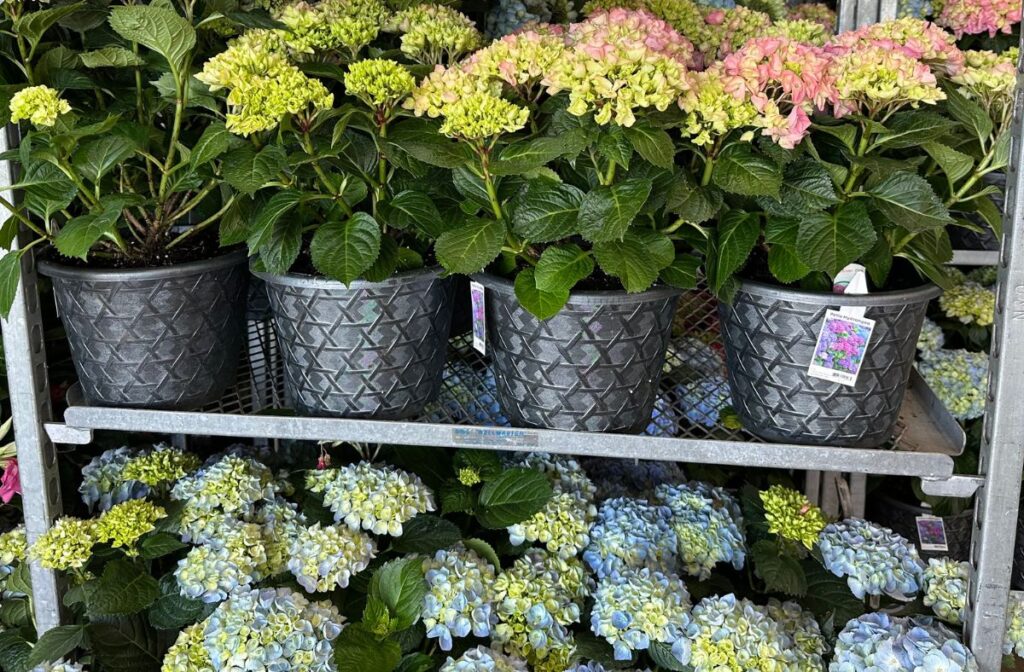
Don’t settle for the first hydrangea you see. Instead, look for a healthy mix of tight buds and partially opened blooms. This combination signals that the plant is actively growing and will continue to produce flowers after you bring it home.
Buds mean more blooms are on the way, while partially open flowers give you a preview of what’s to come.
Avoid plants with mostly fully opened flowers, especially if the petals are starting to look dry, papery, or faded.

These flowers are likely past their prime and won’t last long, meaning you’ll miss out on the full blooming experience.
Also, you should avoid hydrangeas with no visible buds because they may not flower again for some time.
Keep in mind that flower color—especially in bigleaf hydrangeas (Hydrangea macrophylla)—can change depending on the soil’s pH.
Acidic soil typically produces blue flowers, while alkaline soil will result in pink flowers. So be open to some color variation after planting.
And finally, trust your eye. Choose a plant that you genuinely like the look of. A hydrangea should be both healthy and visually appealing—after all, you’ll be enjoying its blooms for weeks to come.

Not Checking the Leaves
Another common mistake when buying potted hydrangeas is focusing only on the flowers and neglecting to inspect the leaves. It’s easy to be drawn in by a plant bursting with blooms, but the leaves tell an important story about the plant’s overall health.

Start by carefully examining the leaves. Healthy hydrangea leaves should be a rich, vibrant green with a full, smooth texture.
Avoid any plant with yellowing, browning, or wilting leaves, as these may signal overwatering, disease, or nutrient deficiencies.
Also, watch out for spots, holes, or ragged edges—signs that the plant may be suffering from fungal infections or insect damage.
If you see any of these warning signs, it’s best to pass on that plant and choose a different one.

Ignoring the Stems
A common mistake people make when buying potted hydrangeas is ignoring the condition of the stems. Healthy stems should be strong, firm, and upright, supporting the leaves and buds without drooping.
Soft, discolored, or mushy stems are often signs of rot or internal damage. Avoid plants with weak stems, as this can affect the hydrangea’s overall health and longevity.
Not Checking for Drainage Holes
A common mistake when buying potted hydrangeas is failing to check if the pot has drainage holes. Proper drainage is crucial because without it, excess water can pool at the bottom, causing soggy soil and increasing the risk of root rot—a potentially fatal problem for hydrangeas.
Before buying your hydrangea, turn the pot over or look underneath to make sure it has drainage holes at the bottom. You don’t want to buy a hydrangea planted in a container without proper drainage.

Root rot can cause the roots to become mushy, blackened, or foul-smelling, making it difficult for the plant to absorb water and nutrients. Root rot often goes unnoticed since the plant may look healthy on the surface.
A plant suffering from root rot or damaged roots may look fine on the surface, but struggle to survive once you bring it home. Even if the topsoil feels dry, water may still be pooling below, silently harming the roots.
Always turn the pot over or look underneath to make sure water can drain freely. If you’re buying a decorative outer pot, confirm that the inner nursery pot has drainage holes or be prepared to remove it before watering.
Overlooking Pest Infestation
Another mistake buyers often make is not closely inspecting the plant for pests.Examine the plant closely for signs of pest infestation. Look under the leaves and along the stems for small insects like aphids, spider mites, or whiteflies.
Webbing, sticky residue, or chewed leaf edges can also point to pest problems.
Even a small pest problem can quickly escalate, spreading to other plants in your home or garden. Avoid any hydrangea showing visible signs of pests to protect your other plants.
Buying a Plant with Really Dry Soil
A common mistake buyers make is forgetting to check the soil before buying. Hydrangeas thrive in consistently moist soil—not soggy, but never dry.
If the soil feels bone dry, it’s a red flag that the plant may be stressed or neglected.
Avoid buying hydrangeas with dry soil, because it can make recovery difficult once you bring the plant home. Always take a moment to feel the soil; it should be slightly damp to the touch.
Choosing plants with properly moist soil gives your hydrangea a much better chance to thrive.
Not Knowing the Type of Hydrangea
One mistake many buyers make is picking a hydrangea without knowing the different types and their specific needs. Each hydrangea variety has unique flower shapes, colors, and care requirements.
For example, bigleaf hydrangeas (Hydrangea macrophylla) have large, round blooms that can change color based on soil pH.

While panicle hydrangeas (Hydrangea paniculata) have cone-shaped flowers and prefer full sun and cooler climates.
Annabelle hydrangeas (Hydrangea arborescens) produce large clusters of white blooms and are known for their hardiness.

If the plants aren’t clearly labeled, don’t be shy about asking nursery staff for help. Understanding what type of hydrangea you’re buying ensures you choose a hydrangea that fits your garden and care routine.