
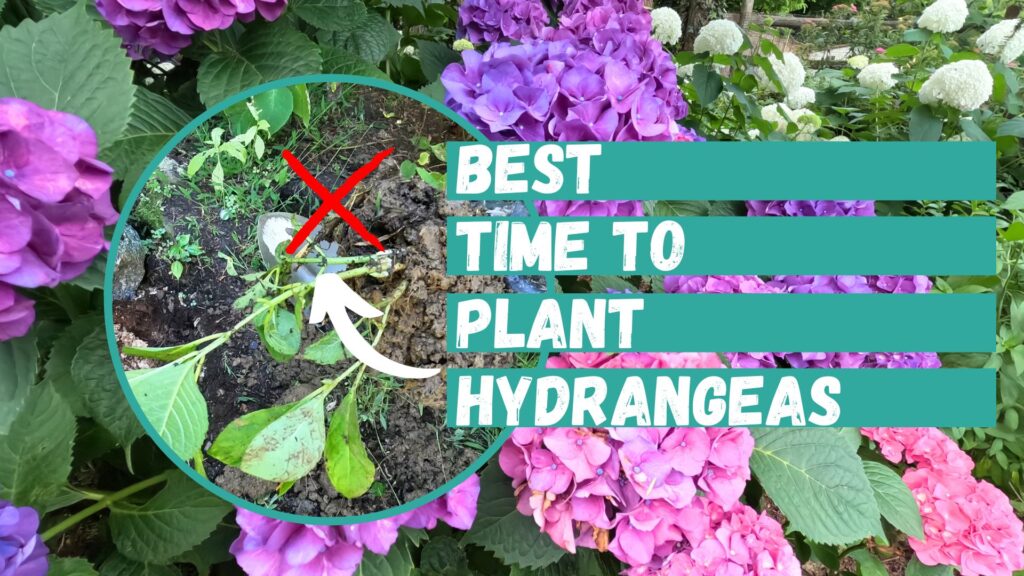
Do you have hydrangeas ready for your garden? But you’re not sure when to plant them? Timing is everything! Plant at the wrong time, and your hydrangeas will struggle or produce fewer blooms.
As a lazy gardener, I want to get it right the first time so it’s easy and low-maintenance. Plant at the right time, and your hydrangeas will thrive with minimal effort.
Below, I’m going to show you the best—and worst—months to plant hydrangeas so your garden looks amazing without all the extra work!
Why Timing Matters
Timing is everything when it comes to planting hydrangeas—especially if, like me, you’re a lazy gardener. Right after planting, your hydrangea needs strong roots to thrive, and the key is giving it enough time to establish them before facing extreme conditions.
Plant too early in cold, frozen soil, and the roots won’t take hold properly—your plant could struggle or even die.
Plant at the wrong time in hot, dry weather, and those new roots can dry out, leaving your hydrangea stressed and less likely to bloom beautifully.
The right timing gives your plant a chance to develop a healthy root system and get ready for those big, vibrant blooms.
And the best part? It means less work for you—fewer watering emergencies, less stress, and more time to enjoy your garden without constant babysitting. Timing it right is the lazy gardener’s secret to healthy hydrangeas!
Worst Months to Plant Hydrangeas
Before we go over the best times to plant your hydrangeas, it’s important to know the worst times—avoiding these will save you a lot of frustration.
Planting in mid-winter is a big no-no. The soil is frozen, which makes it nearly impossible for the roots to establish, and the cold temperatures can actually kill a new hydrangea before it even gets started.
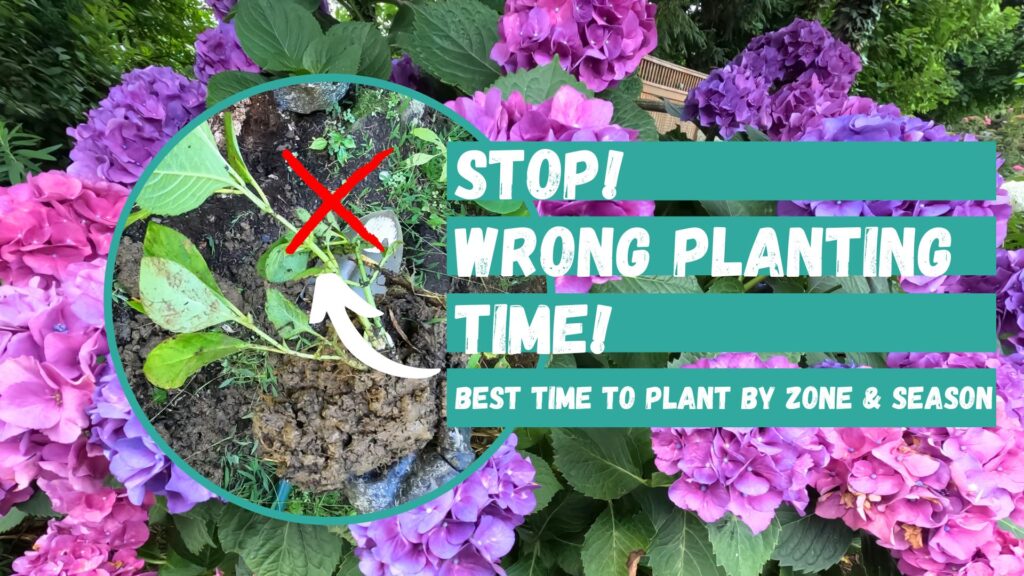
Planting in the peak summer or planting during a heatwave can also be disastrous. Hot, dry weather stresses newly planted hydrangeas, and the roots can dry out before they have a chance to grow strong. This can leave your plant struggling for months, and no one wants to spend all that time constantly watering and worrying.
And then there’s planting during heavy, prolonged rain. Waterlogged soil suffocates the roots and increases the risk of disease, which can set your hydrangea back before it even has a chance to thrive.
By avoiding extreme conditions like freezing winters, scorching summers, heatwaves, and heavy rains, you give your hydrangeas the best chance to grow healthy roots and bloom beautifully—with minimal extra work for you!
Best Months to Plant Hydrangeas
So, when is the best time to plant hydrangeas? There are really two planting windows that give your plants the best chance to thrive—and make your life a lot easier as a lazy gardener.
The first is spring, usually late April to early May, once the ground has thawed. Planting then gives your hydrangeas time to build strong roots before intense summer heat kicks in.
Plus, the warmer soil and steady spring rains do most of the work for you—no need to babysit with constant watering. Just keep an eye out for any late frosts.
The second ideal time is fall, typically late September to early October. By then, the soil is still warm, which is perfect for root growth, while the cooler air keeps the plant from getting stressed. The Fall rains usually mean less watering on your end—again, perfect for lazy gardeners.
So if you plant in spring or fall, you’re setting your hydrangeas up for success. Just avoid planting too early in spring or too late in fall—frost can hit, and your roots won’t stand a chance.
Hydrangea Planting by USDA Zone
Now, the exact best planting time for hydrangeas really depends on where you live. Spring in Maine looks nothing like spring in Georgia, so let’s break it down by planting zones.
Best Months to Plant Hydrangeas in Zones 3 to 5
If you’re in colder northern climates like Maine, Minnesota, or upstate New York—that’s usually zones 3 through 5—spring planting happens later, around May into early June, once the soil has truly warmed up.
Fall planting needs to be earlier, usually by September, so the roots have plenty of time to develop before frost.
Best Months to Plant Hydrangeas in Zones 6 to 7
For zones 6 and 7, planting windows open up a bit earlier. I live in coastal Connecticut, zone 7, and I usually plant hydrangeas in late April through May for spring.
For Fall, I’ll plant from late September into early October—that way the roots can settle in before our first frost. This timing works great for most of the mid-Atlantic and parts of the Northeast, too.
Best Months to Plant Hydrangeas in Zones 8 to 9
If you’re in warmer southern states like Georgia, South Carolina, or Texas, which are often zones 8 and 9, you’ll want to plant earlier in spring—March to April—before the heat kicks in.
Fall planting is actually fantastic in these zones, from October into early November, since winters are milder and give your hydrangeas time to establish roots without heat stress.
Best Months to Plant Hydrangeas in Zone 10
And if you’re in zone 10, like parts of southern Florida or southern California, fall planting is usually your best bet, since summers can be just too hot for new hydrangeas.
So bottom line: use Spring and Fall as your guideposts, but shift those windows depending on your zone. That way, your hydrangeas get the perfect head start without you having to do extra work.
Preparing Your Hydrangea for Planting
Before you plant your hydrangea, it’s really worth taking the time to get things set up right. This step is what makes the difference between a plant that thrives with minimal effort—and one that constantly struggles and makes you work harder.
First, let’s talk soil. Hydrangeas love well-draining soil that holds just enough moisture without staying soggy. Make sure you get the soil right from the start.
Next, pick the right spot. Hydrangeas are happiest with a balance of sun and shade—usually morning sun and afternoon shade works best. Too much sun and they’ll wilt and need constant watering. Too much shade and you’ll get fewer blooms. Take a little time to watch your planting area throughout the day to see how the light falls. If you get this step right, your hydrangea will reward you with beautiful blooms and very little maintenance.
And here’s the lazy gardener truth: the wrong location equals more work for you. That could mean constantly fighting to bring a struggling plant back to life. But the right location means your hydrangea practically takes care of itself.
If you want more tips on finding that perfect planting spot, I’ve got an entire article on Hydrangea Planting Location Mistakes that will save you a lot of headaches. Definitely check it out!
Get Your FREE Hydrangea Care Tracker Printable

Sign up once and you will get access to ALL exclusive content on this website. After unlocking the printable, just save the printable image and then print it. Use it to keep track of your hydrangea care! I hope you like it!
