
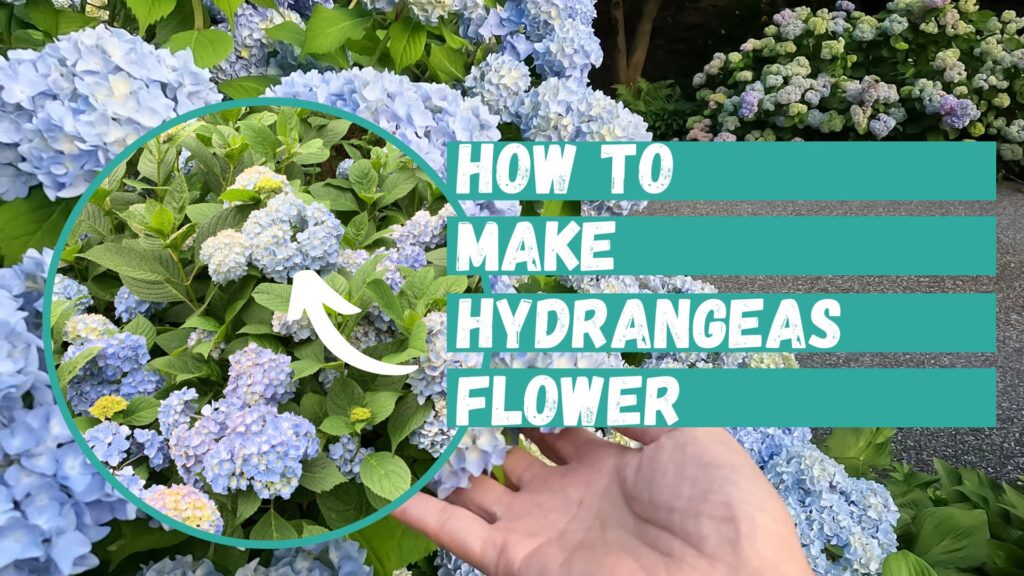
Are you dreaming of hydrangeas covered in giant, pom-pom blooms? Here’s the good news — it’s easier than you think.
If you’ve ever wondered why some hydrangeas are covered in huge, giant blooms while others barely flower at all. Here’s the secret: when it comes to hydrangeas, sometimes doing less is the key to getting more.
Below, we’ll go over what to stop doing, what really matters, and the simple steps that help your hydrangeas produce bigger, bolder, and more abundant blooms. A few smart adjustments now can make all the difference.

Planting 101 participates in affiliate programs including Amazon Associates Program and may earn commission from qualifying purchases at no extra cost to you. Thank you for your support.
Stop Pruning
One of the biggest mistakes you can make with hydrangeas that will result with no flowers is pruning.
Varieties like Bigleaf hydrangea and Oakleaf hydrangea bloom on old wood — which means they set their flower buds on last year’s stems. If you prune them in fall, winter, or early spring, you’re very likely cutting off the exact stems that would have produced flowers.
Trust me — I learned this the hard way. One year I gave my bigleaf hydrangeas a “nice tidy trim” in the Fall. That summer? Not a single flower. I had accidentally cut off every flower bud and had to wait an entire year for them to recover.

On the other hand, varieties like Panicle hydrangea and Smooth hydrangea bloom on new wood. These types actually benefit from pruning, which encourages stronger stems, a fuller shape, and bigger flowers.
If you’re not sure if you have old wood or new wood hydrangeas, the safest strategy is simple: don’t prune. That’s what I do. I might tidy up a few wilted leaves here and there, but mostly I leave my hydrangeas alone. Even the dried flower heads look magical dusted with snow in winter—and this way, I never risk cutting off next summer’s blooms.

Fertilizing the Wrong Way
Another common mistake that can keep your hydrangeas from flowering is fertilizer — either too much or too little. The key is balance.
Hydrangeas usually do best with two feedings per year: once in early spring and once in early summer. Feeding in the spring is especially important — it sets your plant up for strong growth and bigger blooms. Use a slow-release, balanced fertilizer when the leaves are just starting to emerge. Look for ratios like 10-10-10 or 14-14-14.

Be careful with fertilizers high in nitrogen. While nitrogen encourages leafy growth, too much can come at the expense of flowers. Fertilizer labels show three numbers — N-P-K — for nitrogen, phosphorus, and potassium. If the first number is much higher than the others, it’s high in nitrogen and not ideal for flowering hydrangeas.
If your hydrangea looks healthy but barely blooms, too much nitrogen could be the reason. The right fertilizer gives your plant the boost it needs to produce those big, vibrant flowers you’ve been dreaming of.
I learned this the hard way when I first started gardening. I didn’t fertilize my hydrangeas at all, and the result was a plant full of leaves but with only a handful of blooms. Once I started feeding them twice a year, they finally started flowering beautifully.
Watering Mistakes
Hydrangeas need just the right amount of water — too much or too little can prevent them from flowering.
Established hydrangeas don’t need daily watering. Usually, watering once or twice a week is enough. The key is deep watering: soak the soil thoroughly so water reaches the roots. Deep watering helps roots grow strong and healthy, which supports bigger, more resilient blooms throughout the season.
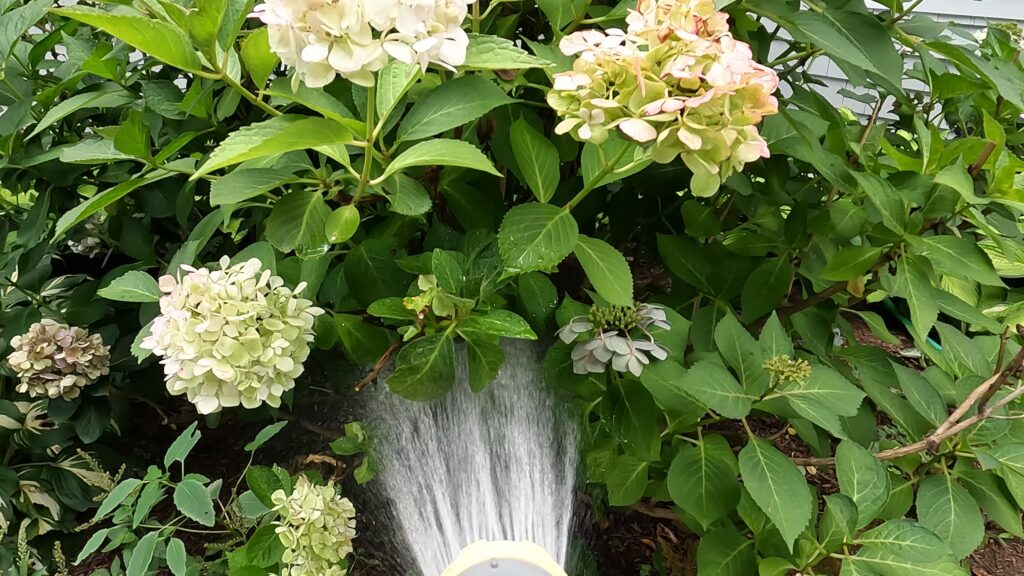
Mulching around the base of your hydrangea can help retain moisture and regulate soil temperature. A 2 to 3 inch layer of organic mulch, like shredded bark or compost, keeps roots cool in the summer and reduces how often you need to water.
In the summer, you might notice your hydrangeas drooping in the heat. Don’t panic. A little wilting during the day is normal, and the plant usually recovers by evening. If you keep watering every time you see drooping, you can risk overwatering them — which can harm the roots and reduce flowering.
On the other hand, too little water is also a problem. I learned this the hard way one summer when I was busy traveling. I neglected my hydrangeas and they didn’t get enough water. As a result the blooms were sparse. Consistent watering makes a noticeable difference in how much flowers you’ll get.

The secret is simple: water deeply, consistently, and and use mulch to help retain moisture. Give your hydrangeas the right balance, and they’ll reward you with abundant, stunning flowers.
Sun Exposure
Hydrangeas do well in partial shade, but they still need sunlight to produce big, beautiful blooms. Without enough sun, your plant will grow healthy leaves but produce fewer flowers.
The ideal planting location is morning sun with afternoon shade. This gives your hydrangea enough light to help it flower without scorching it in the hot afternoon heat.
Here in Connecticut, Zone 7a, I’ve noticed a clear difference: hydrangeas planted in deep shade tend to produce sparse blooms, while those that get even a few hours of sun will flower abundantly.
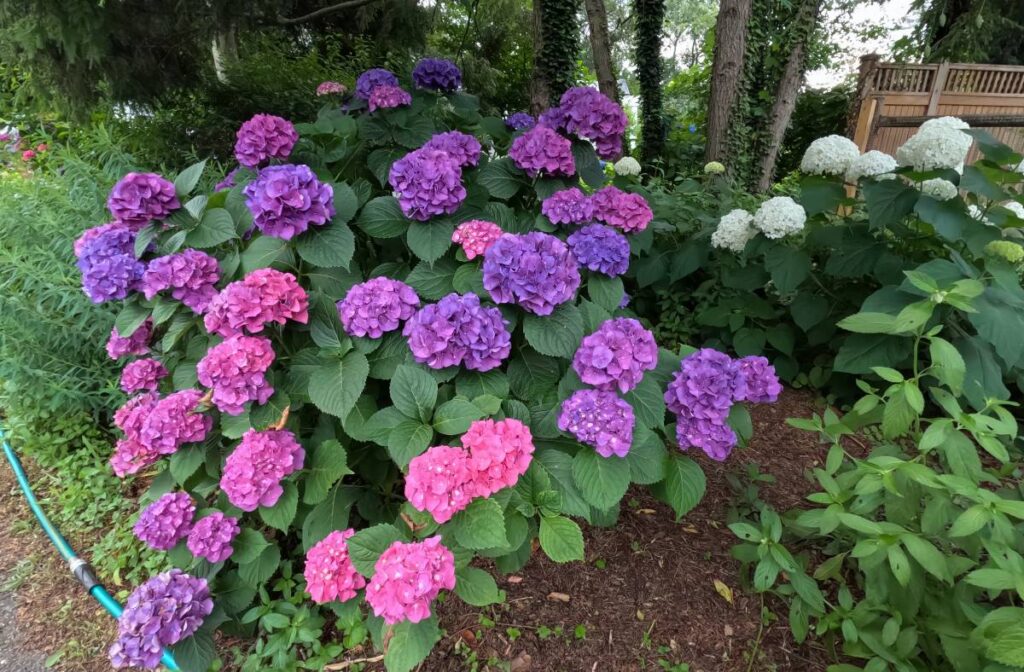
If your hydrangea isn’t getting enough sunlight, one simple fix is to trim back nearby trees or overhanging branches. Even a little extra sunlight can make a big difference in encouraging fuller, more prolific blooms.
If trimming isn’t possible, consider transplanting your hydrangea to a sunnier spot. The best time to move it is in spring or fall, when the weather is milder. Avoid transplanting in the middle of summer, as it’s much harder to keep the plant from drying out in the heat.
Some Things Are Out of Your Control
Even if you follow every tip in this video—pruning, watering, fertilizing, and giving your hydrangeas the perfect combination of morning sun and afternoon shade—there’s one truth every gardener needs to know: sometimes, mother nature calls the shots. No matter how careful you are, there are factors you simply can’t control, and the weather is the biggest one.
Hydrangeas do best when spring warms gradually, summer temperatures are mild, and rainfall is consistent. When all these conditions line up, the results can be spectacular: big, vibrant blooms.

But unpredictable weather can change everything. A few years ago in Connecticut, we had an unusually warm spring. My hydrangeas started budding early, and I was excited for stunning blooms. Then, out of nowhere, a hard freeze hit, and most of those delicate buds were lost. That year, my hydrangeas barely flowered. It wasn’t just my garden—neighbors across town had the same problem. The result? A town full of hydrangeas that looked anemic and flowerless.
Now compare that to a year with ideal conditions: gradual warming, no unexpected frosts, and steady rainfall. Hydrangeas were blooming everywhere—even wild ones along the roadside. The flowers were full, colorful, and absolutely stunning.
The takeaway? You can do everything right, but sometimes Mother Nature has the final say. Don’t be discouraged if your hydrangeas don’t flower nicely this year. Gardening requires patience, flexibility, and a respect for the seasons. And remember—if your hydrangeas don’t bloom this year, there’s always next year. Every season is a fresh opportunity.
Get Your FREE Hydrangea Care Tracker Printable

Sign up once and you will get access to ALL exclusive content on this website. After unlocking the printable, just save the printable image and then print it. Use it to keep track of your hydrangea care! I hope you like it!

You May Also be Interested in these Hydrangea Care Tips
Step by Step: How to Easily Propagate Hydrangeas (video)
How to Deadhead Hydrangeas (video)
How to Make Hydrangeas Flower (video)
Beginner’s Guide: How to Care for your Hydrangea (video)
Can I Transplant Hydrangeas in the Summer?
Can I Transplant Hydrangeas in the Winter?
Hydrangea Planting Mistakes to Avoid