
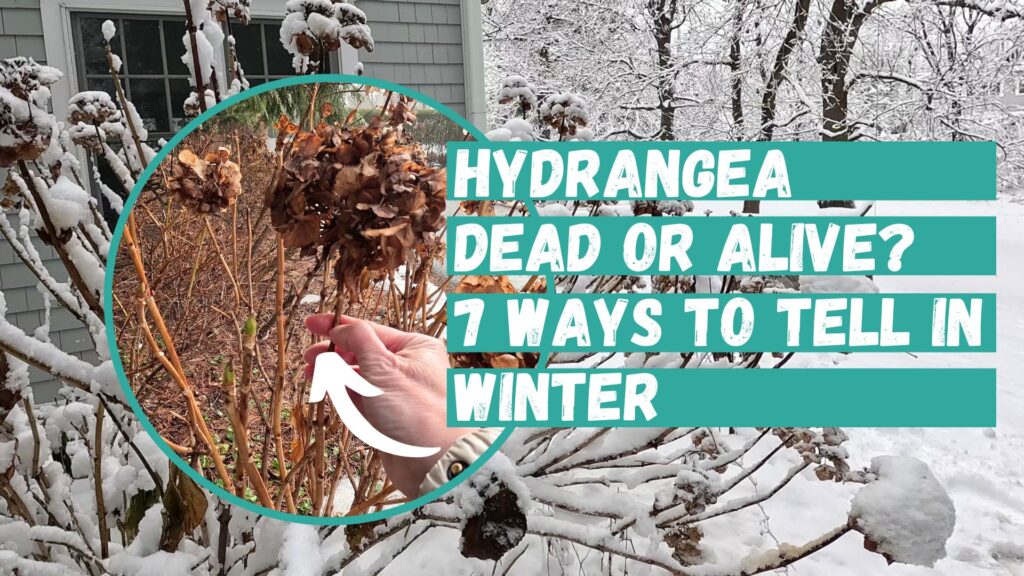
Are you wondering if your hydrangeas are dead? Brown sticks, no leaves, dead-looking flowers. If your hydrangeas look lifeless right now, don’t worry. Winter has a way of making even healthy hydrangeas look completely dead.
In most cases, they’re not dead at all, just dormant. Below, I’m going to walk you through seven ways to tell if your hydrangea is truly dead or just dormant.
I’ll also explain how these signs apply differently to old wood hydrangeas, like bigleaf, and new wood hydrangeas, like Annabelle, so you’ll know exactly what to watch for in your garden. By the end, you’ll know exactly what to look for and how to tell if your hydrangea is dead or alive.
Plump Winter Buds
The first thing to look for in winter is buds. On old wood hydrangeas, like bigleaf hydrangeas, the buds you see along the stems says a lot about your plant because they are the flower buds for next year.
These buds form in late summer or fall, and winter dormancy keeps them protected until spring. The more healthy buds you see, the more flowers your hydrangea is likely to produce next year, making bud count a good predictor of spring blooms.
Firm, plump buds mean the plant has stored energy and is preparing for next year’s blooms. If they feel shriveled, the cold may have damaged them, and the plant may produce fewer flowers.

Important: Don’t prune your bigleaf hydrangeas in winter. You might accidentally cut off the buds that would become next year’s flowers.
For Annabelle and other new wood hydrangeas, buds at the base or along stems are primarily growth buds rather than flower buds, because Annabelle blooms on new wood each year.
Unlike bigleaf hydrangeas, you won’t see a lot of buds on Annabelle hydrangeas, but don’t worry — that’s not an indicator of next year’s flowers. Even if the stems die back completely, the plant will produce fresh flowering stems from the crown in spring.
That’s why I prune my Annabelle hydrangeas every year — cutting back old stems encourages strong new growth, which will produce the next summer’s flowers.
The Scratch Test
Another way to tell if your hydrangeas are alive in the winter is the scratch test. Using your fingernail or a small pair of pruners, lightly scratch the bark on a stem. You do not need to cut deeply.
If you see green tissue underneath, that stem is alive. If it is brown or gray all the way through, that section is dead.

Hydrangeas often die back from the tips first, so always check lower on the stem before making decisions. One dead cane does not mean the whole plant is gone. For big leaf hydrangeas and old wood hydrangeas, dead tips may mean fewer blooms next year, but the plant is still alive.
For Annabelle hydrangeas and other new wood hydrangeas, even if the stems above ground look dead, green tissue at the base ensures the plant will produce new flowering stems in spring. The scratch test is a simple way to confirm your plant is still alive, and it helps you avoid unnecessary panic.
Flexible versus Brittle Stems
Another easy way to tell if your hydrangea is dead or alive is the flexibility test. Gently bend a stem. Living wood bends slightly before breaking, while dead wood snaps cleanly.
On big leaf hydrangeas and old wood hydrangeas, flexible stems means the plant is alive
For Annabelle hydrangeas and new wood hydrangeas, brittle stem tips above ground are not a problem, because flowers form on new stems. Even if the upper stems break, the plant will regrow from healthy tissue at the base.

Life at the Base and Crown
Checking the base and crown is one of the most important signs for all hydrangeas. For bigleaf hydrangeas and old wood types, swelling buds or shoots at the crown show the plant is alive.
For Annabelle hydrangeas and new wood hydrangeas, the base is critical because the plant blooms on new wood. Even if all stems above ground appear dead, as long as the crown is alive, new flowering stems will emerge in spring.
In fact, Annabelle is very forgiving — you can lose most of the top growth and still have a full summer bloom if the base is healthy. This is also why pruning Annabelle in winter works well — cutting back old stems encourages strong new growth.

Old Blooms Still Attached
Dried flower heads can tell you more than you might think. On bigleaf hydrangeas, old blooms still attached indicate that the old wood survived winter and will produce flowers again.
That’s why it’s best to just leave old blooms in place since you don’t want to accidentally cut off buds. Removing or pruning stems in winter can remove next year’s flower buds.
For Annabelle and other new wood hydrangeas, old blooms are mostly cosmetic. Annabelle blooms on new stems, so even if last year’s flowers died or fell off, fresh stems will produce new blooms. Leaving old blooms on Annabelle plants can still provide some insulation to the buds at the base, offering extra winter protection.
The Snow Line Clue
Snow can actually be a good thing for hydrangeas. It acts as natural insulation, protecting buds and stems from extreme cold and frost.
For bigleaf hydrangeas, snow coverage can help preserve older flowering wood. Buds and stems that were buried under snow are more likely to survive winter and produce blooms next year.
On the other hand, stems exposed above the snow line may experience more cold damage, which can reduce flowering. Observing which parts of your plant were protected by snow can give you a sense of which stems are likely to produce flowers in spring.
For Annabelle and other new wood hydrangeas, the snow line is even more about protecting the crown and base than the stems themselves. Because Annabelle blooms on new wood each year, it doesn’t matter if the above-ground stems die completely — the flowers will come from new stems emerging from the base.
However, snow coverage still plays an important role: it helps shield the crown from frost, keeps the soil slightly warmer, and ensures the root system stays healthy. Even if all the top growth is killed by frost, a protected crown under the snow will allow the plant to push vigorous new growth in spring.
A practical tip: in areas with patchy snow or where the snow melts early, you can add extra insulation by mulching around the base of your hydrangeas. I personally just use natural leaves for mulch — they’re easy, free, and provide excellent protection for both bigleaf and Annabelle plants.
Leaf Buds versus Flower Buds
For bigleaf hydrangeas, which bloom on old wood, you’ll usually find two types of buds on a stem: flower buds and leaf buds. Flower buds are typically rounder and plumper, while leaf buds are thinner and pointed. The plump flower buds are what will open into blossoms next summer.
The more plump flower buds you see, the more flowers your hydrangea is likely to produce. This is one reason counting buds can be a useful indicator for gardeners predicting next year’s blooms.
If some of these buds are damaged by cold, the plant may still produce leaves and some flowers, but you could see a lighter bloom season.
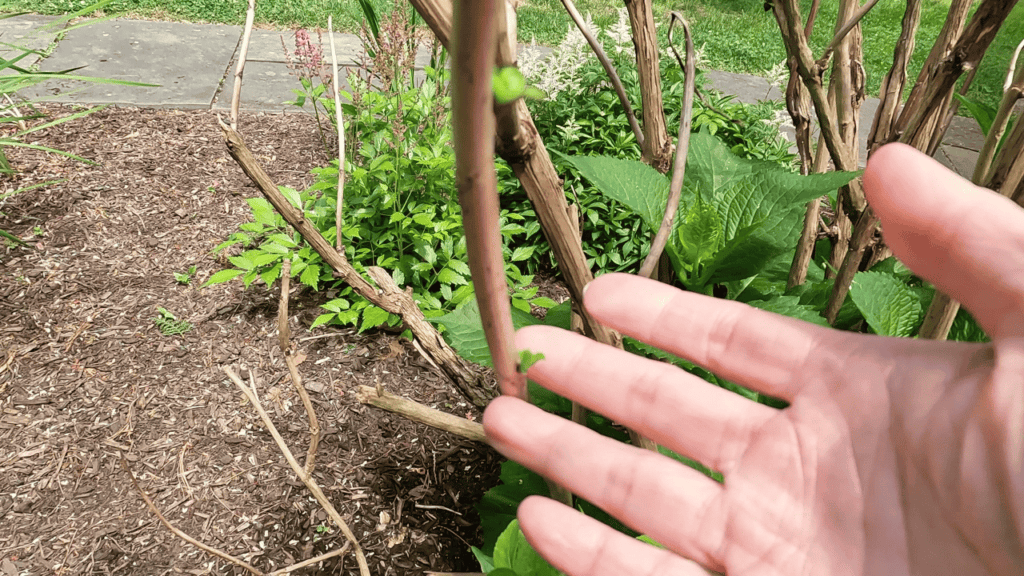
For Annabelle and other new wood hydrangeas, you won’t see the same abundance of plump flower buds as you do on bigleaf, and that’s completely normal — it’s not an indicator that the plant won’t flower next year. Even if the old stems look bare or dead, a healthy crown and base will produce vigorous new stems that will bloom later in the season. ‘
For Annabelle hydrangeas, the key is simply to see healthy, firm buds at the base or along any surviving stems. These buds are a sign that the plant is alive and ready to produce flowers in summer.
Practical tip: If you’re unsure, resist the temptation to prune bigleaf hydrangeas heavily in winter, because you might remove the flower buds.
For Annabelle, winter pruning is actually encouraged, because cutting back old stems promotes strong new growth, which will support the next season’s blooms. Knowing the difference between leaf and flower buds helps you make better pruning decisions and set your plants up for a successful spring.
Don’t be Rash
If your hydrangea shows any of these signs, give it time. Wait until you see active spring growth before making major cuts or removing the plant.
Get Your FREE Hydrangea Care Tracker Printable

Sign up once and you will get access to ALL exclusive content on this website. After unlocking the printable, just save the printable image and then print it. Use it to keep track of your hydrangea care! I hope you like it!

You May Also be Interested in these Hydrangea Care Tips
Step by Step: How to Easily Propagate Hydrangeas (video)
How to Deadhead Hydrangeas (video)
How to Make Hydrangeas Flower (video)
Beginner’s Guide: How to Care for your Hydrangea (video)
Can I Transplant Hydrangeas in the Summer?
Can I Transplant Hydrangeas in the Winter?
Hydrangea Planting Mistakes to Avoid