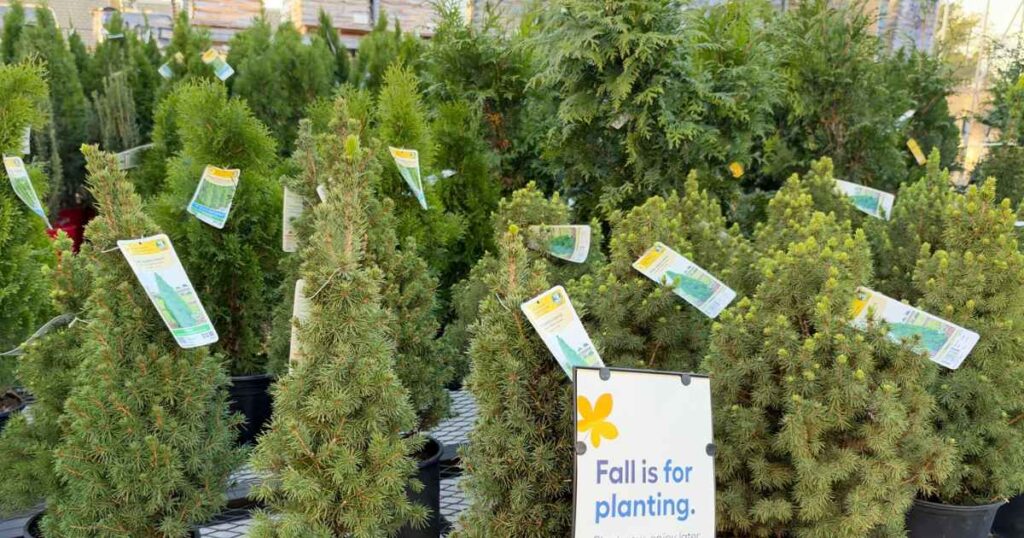
I recently stopped by Home Depot and Lowe’s in November and was surprised to see so many trees and shrubs still for sale.
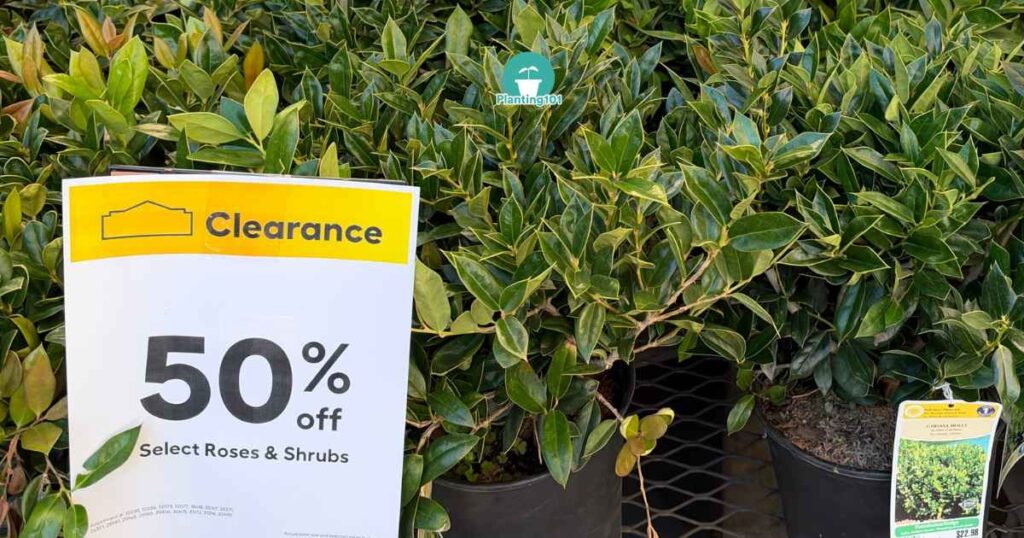
There were rows of evergreens, tall privacy trees, compact shrubs, and even some plants marked 50% off.
The clearance prices were tempting, especially considering how expensive landscaping can get.
But seeing all those plants at the garden center made me wonder: Is November actually too late to plant trees and shrubs?
After all, just because stores are still selling plants doesn’t necessarily mean it’s a good time to put them in the ground.
The good news is that November isn’t automatically too late for planting. Some trees and shrubs can still be planted successfully, particularly in regions with relatively mild winters.
However, others are much better off waiting until spring.
Here’s what you need to know before planting trees and shrubs in November.
Can You Plant Trees and Shrubs in November?
Yes, you can plant certain trees and shrubs in November, but it depends on the plant, your climate, and the condition of the soil.
Fall can be an excellent planting season because cooler temperatures reduce heat stress and plants don’t need as much energy to support new leaf growth.
Roots can also continue developing as long as soil temperatures are suitable.
However, November is getting late in the planting season for many northern regions.
According to the New York Botanical Garden, most deciduous woody plants in the New York City area can be planted during their fall dormancy period, generally from October 15 through December 1.
Evergreens, on the other hand, are best planted earlier, usually by the beginning of October in that region.
So while some plants can still go into the ground in November, others may not have enough time to establish roots before winter.
The most important thing is knowing the difference.
1. Deciduous Trees May Still Be Good Candidates
If you’re planting in November, deciduous trees may be among the better options.
These are trees that lose their leaves in fall and enter dormancy during winter.
Once the leaves have dropped, the tree no longer needs to support a full canopy of foliage, reducing its water demands.
In regions with relatively mild late falls, certain hardy deciduous trees can still be planted while the soil remains workable.
But not every deciduous tree responds equally well to late planting.
Some species, including birch, oak, sweetgum, and certain maples, can be more difficult to transplant and may establish better when planted in spring.
My advice: Don’t assume that every leafless tree at the garden center is a good November purchase. Check the species and the recommended planting season before buying.
2. Deciduous Shrubs Can Also Be Planted in Late Fall
Certain hardy deciduous shrubs may also tolerate November planting, particularly if they’re container-grown.
These shrubs lose their leaves as winter approaches and enter dormancy.
Because they’re not supporting active foliage during winter, they generally have different moisture demands than evergreens.
However, the specific plant and your local climate still matter.
A shrub planted in early November in a relatively mild climate has a better chance of establishing than one planted just before prolonged freezing weather.
I’d also pay attention to how the shrub was grown.
Container-grown shrubs usually experience less root disturbance during planting than field-grown plants that have been dug up and wrapped in burlap.
The University of Connecticut notes that container-grown trees and shrubs provide more flexibility in planting time, although they can also develop circling roots.
My advice: If you’re considering a deciduous shrub in November, choose a healthy, cold-hardy variety that is suitable for your USDA growing zone.
3. Be Careful Planting Arborvitae in November
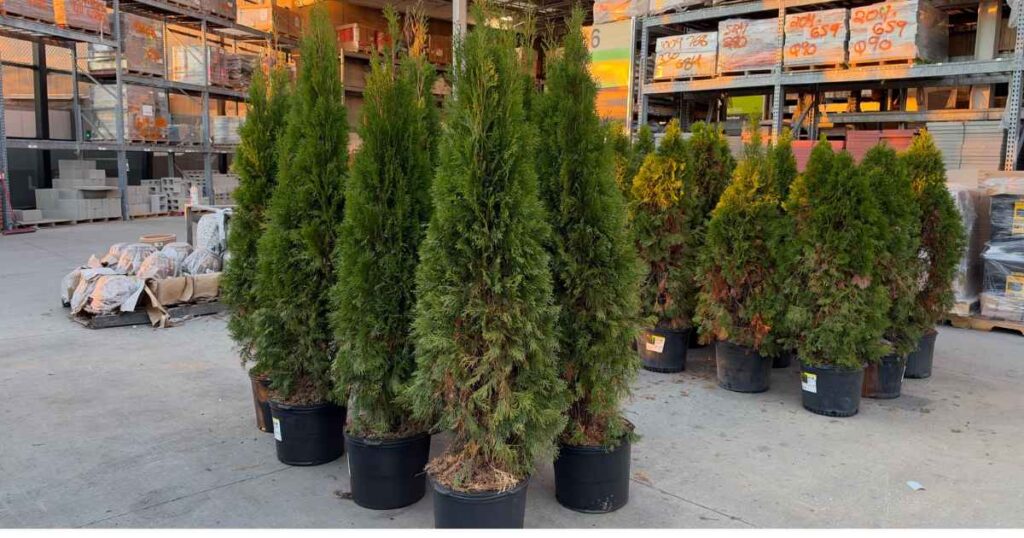
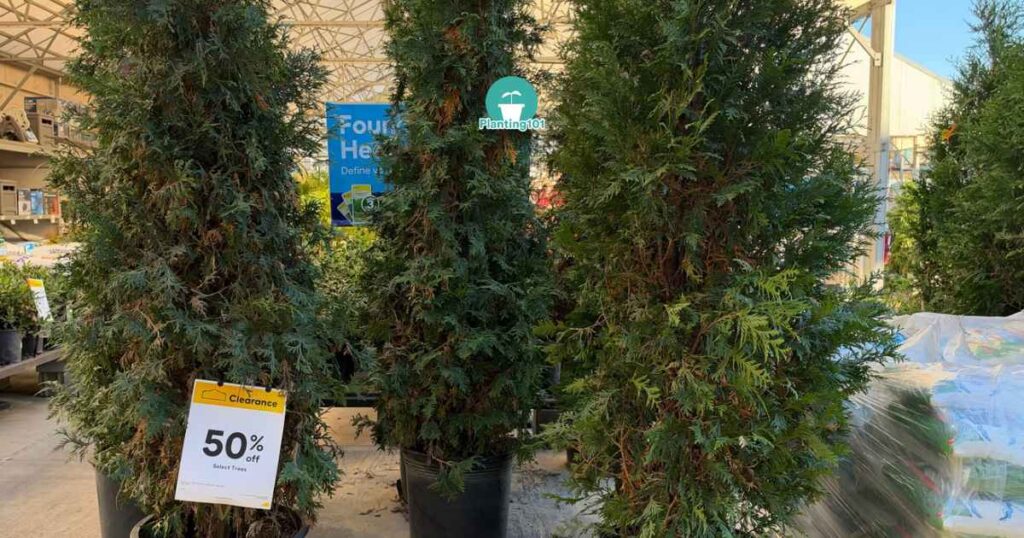
I spotted rows of Arborvitae at Home Depot and Lowe’s.
These are popular landscaping plants because they provide year-round greenery and are often used as privacy screens.
But November isn’t my favorite time to plant them in colder climates.
Unlike deciduous trees, arborvitae keep their foliage throughout winter.
That means they can continue losing moisture through their needles even when temperatures are freezing.
If the roots haven’t had time to establish before the ground freezes, the plant may struggle to replace that moisture.
This can lead to winter burn, browning, and sometimes serious damage.
My advice: In areas with cold winters, I’d generally wait until spring rather than planting arborvitae in November.
4. Broadleaf Evergreens Are Another Plant I’d Be Cautious About
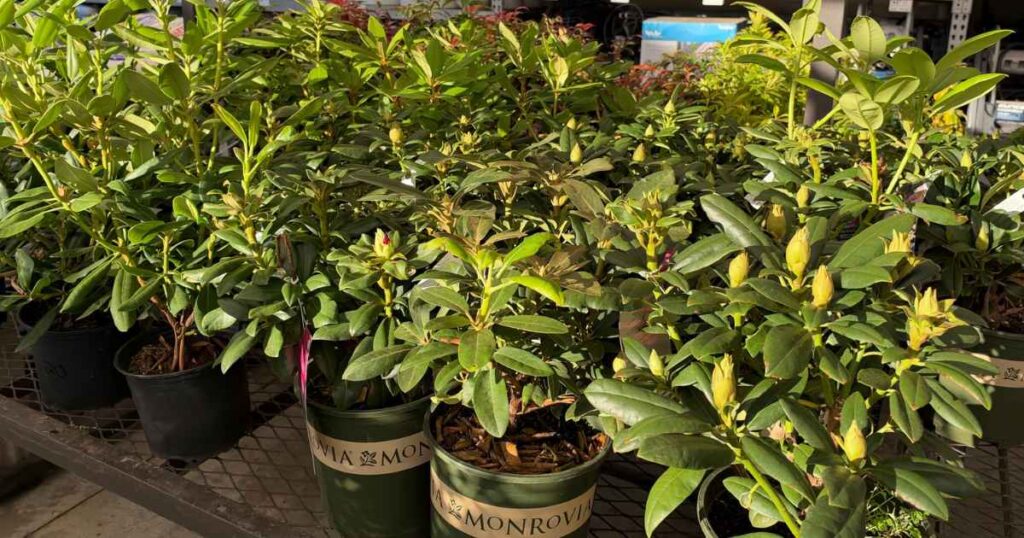
Broadleaf evergreens include plants such as boxwood, holly, and rhododendron.
Unlike deciduous shrubs, these plants keep their leaves throughout the winter.
And those leaves can continue losing moisture during cold, windy weather.
When soil is frozen, the roots may have difficulty replacing that lost water.
This makes newly planted broadleaf evergreens particularly vulnerable to winter desiccation.
According to the University of Connecticut’s tree and shrub planting guidelines, evergreens, particularly broadleaf types, are generally best planted in spring.
Even if a broadleaf evergreen looks healthy at the garden center in November, that doesn’t mean it will establish successfully before winter.
My advice: Unless you live in a mild climate with a long growing season, I’d save these purchases for spring.
5. What About Small Potted Evergreens?
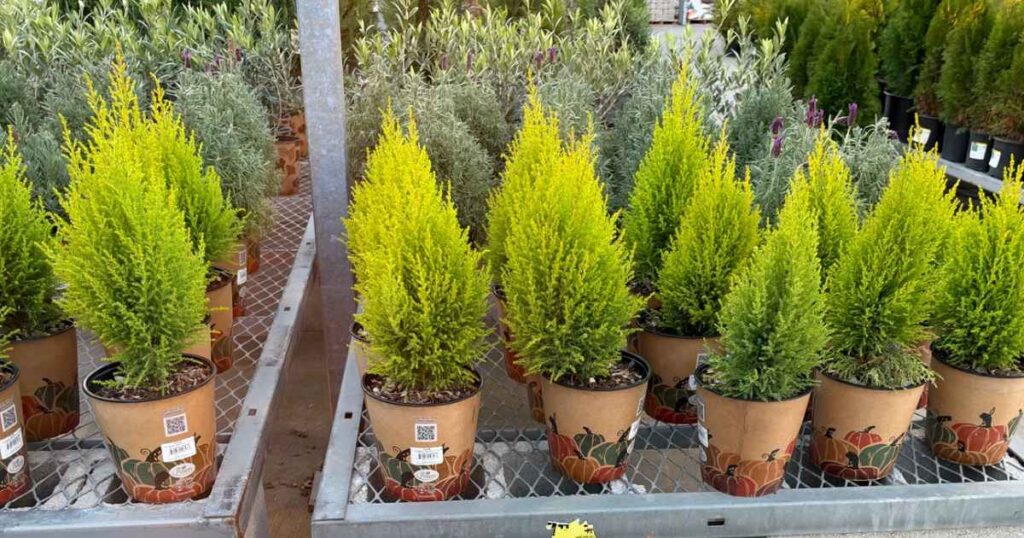
During my Home Depot visit, I also spotted compact evergreens with bright yellow-green foliage.
They were some of the prettiest plants in the outdoor garden center.
I could easily imagine using them in containers near a front door or adding them to a landscape for winter color.
But small potted evergreens come with their own challenges.
First, not every small evergreen sold at a garden center is hardy enough to survive winter outdoors in your area.
Second, roots in containers are more exposed to freezing temperatures than roots planted in the ground.
And finally, different evergreen varieties have very different sunlight, moisture, and temperature requirements.
My advice: Before buying a potted evergreen in November, check the plant tag for the exact variety and USDA hardiness zone.
If you’re planning to leave it outdoors in a pot all winter, make sure the container and root system will have adequate cold protection.
6. What If the Ground Hasn’t Frozen Yet?
One of the biggest questions gardeners have is whether they can still plant as long as the ground isn’t frozen.
The answer is that unfrozen soil is necessary for most conventional planting, but it doesn’t automatically mean conditions are ideal.
You also need to consider how soon prolonged freezing weather will arrive.
Roots need time and suitable soil temperatures to begin establishing.
If you’re planting just days before the ground freezes, the plant may enter winter with very little new root growth.
You should also avoid planting in soil that’s excessively wet.
Working waterlogged soil can damage its structure and create poor growing conditions for roots.
My advice: Consider the upcoming weather, soil conditions, and plant species rather than relying on the calendar alone.
7. How to Protect Trees and Shrubs Planted in November
If you decide to plant a tree or shrub in November, there are several things you can do to improve its chances of surviving winter.
Water Thoroughly After Planting
Newly planted trees and shrubs need adequate moisture, even when temperatures are cool.
Water thoroughly after planting and continue checking soil moisture while the ground remains unfrozen.
Don’t assume rainfall is sufficient, particularly during a dry autumn.
However, avoid keeping the soil constantly saturated.
Add Mulch Around the Base
A layer of organic mulch can help moderate soil temperatures and conserve moisture.
Spread mulch around the root zone rather than piling it against the trunk.
Generally, a layer approximately 2–3 inches deep is appropriate for trees and shrubs, depending on the material and site conditions.
Keep the trunk flare visible and the mulch away from the bark.
Protect Vulnerable Evergreens From Winter Wind
If you’ve already planted a vulnerable evergreen, winter wind protection may help reduce moisture stress.
A properly positioned burlap screen can reduce exposure to drying winds without wrapping the plant tightly.
This can be especially helpful in exposed locations.
Avoid Heavy Pruning
Late fall isn’t the time for unnecessary major pruning of newly planted trees and shrubs.
Focus on removing broken, dead, or hazardous branches.
Save routine shaping for the appropriate pruning season for that species.
Don’t Overfertilize
Newly planted trees and shrubs generally don’t need a large dose of fertilizer.
Focus first on proper planting, watering, and root establishment.
Fertilize only when soil testing or plant-specific guidance indicates a need.
8. Should You Buy Clearance Trees and Shrubs in November?
This is the question I kept thinking about during my visits to Home Depot and Lowe’s.
At Lowe’s, I spotted trees and shrubs marked 50% off.
That’s a tempting discount when you’re planning landscaping projects.
But I wouldn’t buy a plant simply because the price is low.
Before purchasing, I’d ask myself three questions.
First, is this plant actually suitable for November planting in my climate?
A hardy deciduous shrub may be worth considering, while a newly planted evergreen could face greater winter risks.
Second, does the plant look healthy?
Check for damaged stems, pests, diseases, and severely circling roots.
Third, can I plant it properly right away?
If the weather is getting colder and the ground may freeze soon, I’d rather wait until spring than rush a landscaping project.
Sometimes a 50% discount is a great opportunity.
Other times, the savings aren’t worth the risk of losing the plant over winter.
So, Is November Too Late to Plant Trees and Shrubs?
Here’s the short answer.
November isn’t necessarily too late for hardy deciduous trees and shrubs, especially in milder climates where the soil stays workable well into fall.
However, it’s generally later than ideal for planting many evergreens in regions with cold winters.
Arborvitae, boxwood, hollies, and other evergreens can be more vulnerable because their foliage continues losing moisture during winter.
And regardless of what you’re planting, avoid frozen or waterlogged soil.
If you’re unsure whether a particular plant is suitable for late-fall planting, waiting until spring is often the safer choice.
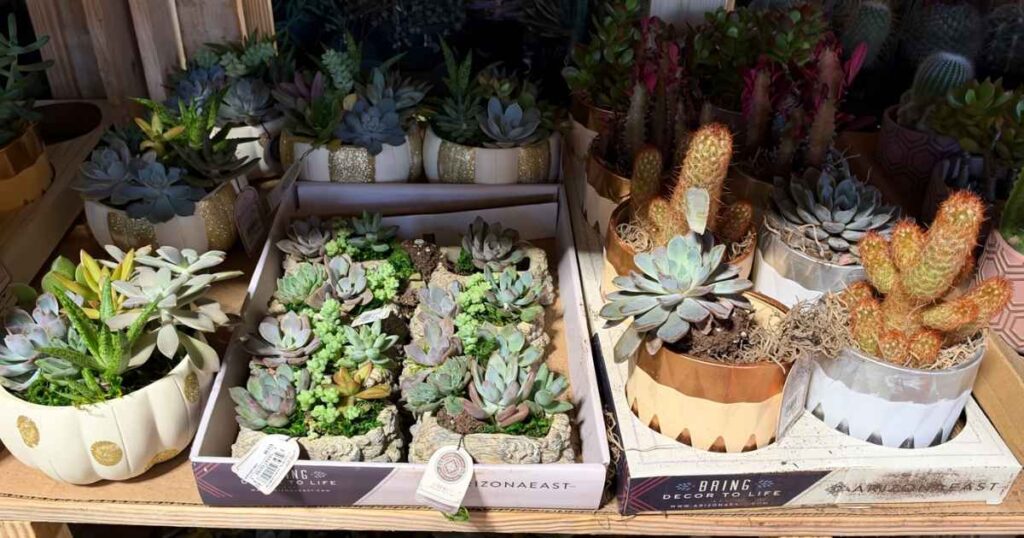
Cacti and Succulents at Home Depot: Best for Beginners
I stopped by Home Depot’s garden center recently and couldn’t believe how many cacti and…
15 Plants I Found at Home Depot in November
I stopped by Home Depot’s garden center in November, and I was surprised by how…
Lowe’s Plant Clearance: Are 50% Worth Buying in November?
I stopped by Lowe’s garden center and spotted something that immediately caught my attention: plants…