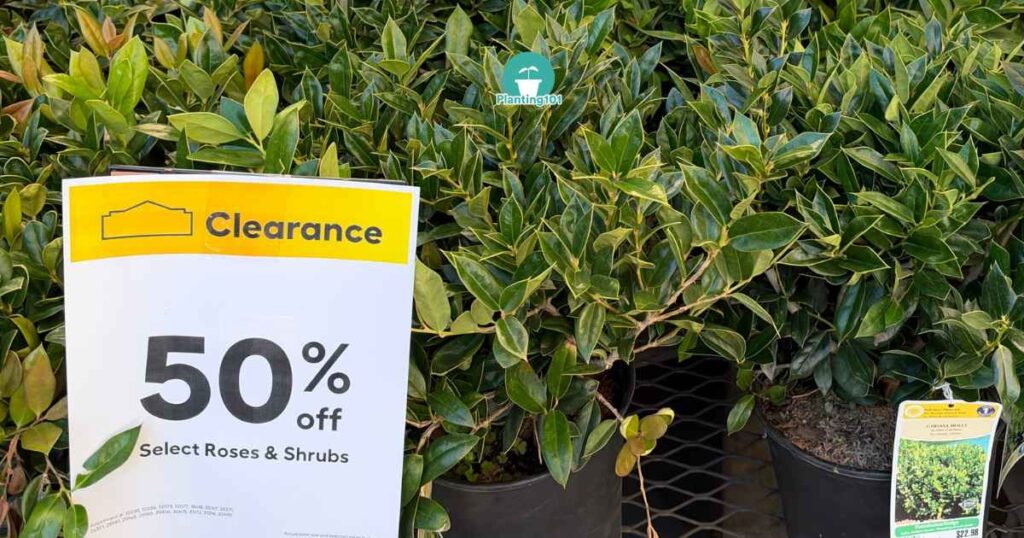
I stopped by Lowe’s garden center and spotted something that immediately caught my attention: plants marked 50% off!
There were trees, shrubs, and evergreens on clearance. Some looked perfectly healthy, and the discounts were tempting.
After all, landscaping plants can get expensive, especially when you’re buying several at once.
But before loading up your shopping cart, there’s something important to consider. Just because a plant is half price doesn’t necessarily mean it’s a good deal.
November can be a tricky time to plant, particularly if you live somewhere with cold winters. Some plants may still have time to establish their roots, while others could struggle to survive.
Here’s what I found at Lowe’s and what you should know before buying clearance plants this late in the season.
Lowe’s Had Trees and Shrubs Marked 50% Off
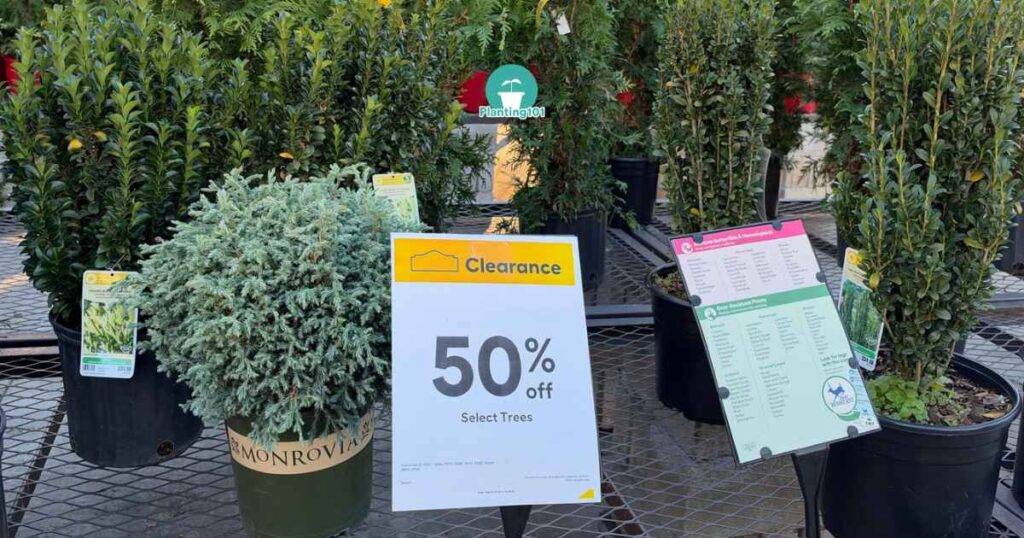
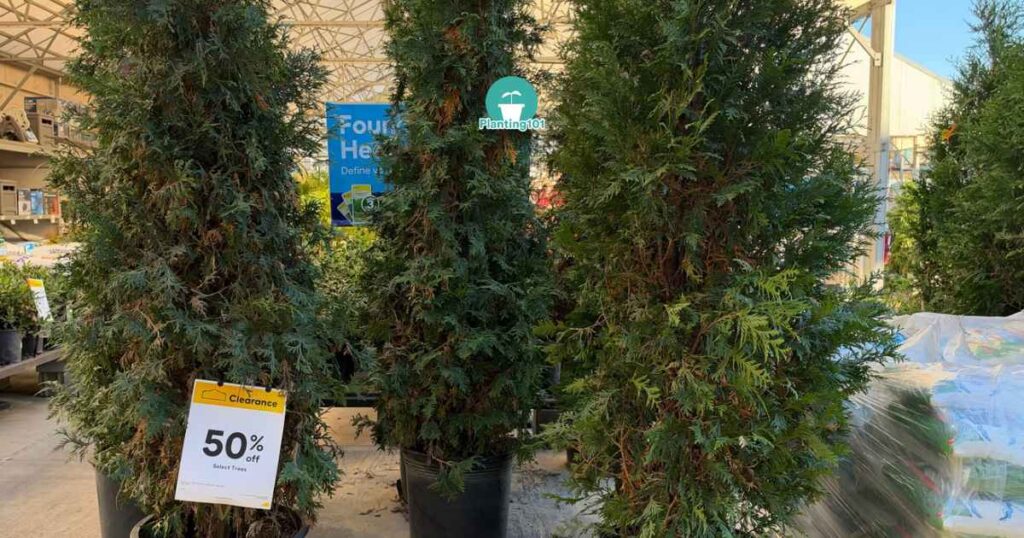
One of the first things I noticed was a display of potted trees with a large yellow clearance sign advertising 50% off select trees.
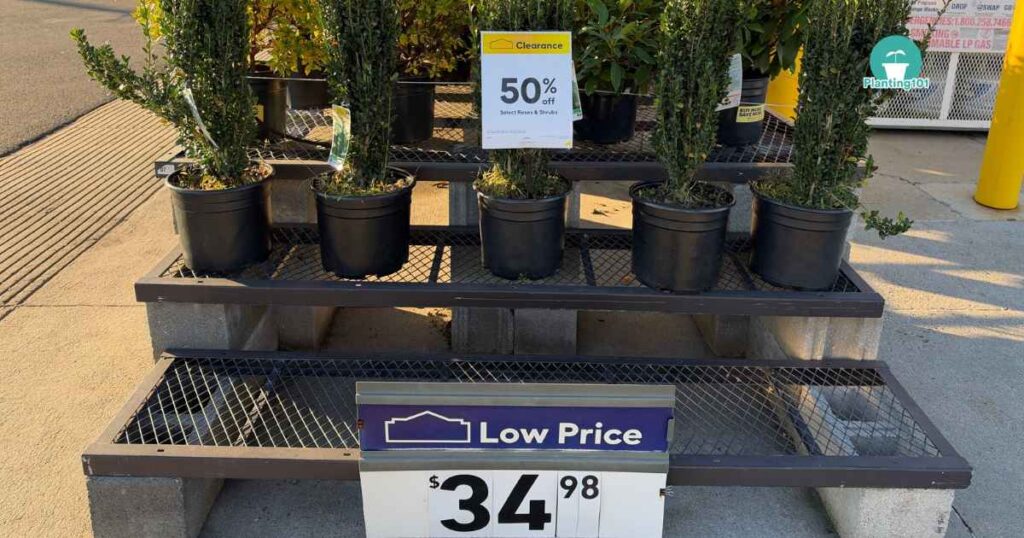
I also spotted other clearance displays with shrubs, including broadleaf evergreens and taller conifers.
Some of the plants still had healthy-looking green foliage. Others showed signs of seasonal wear, which isn’t necessarily unusual in November.
Is November Too Late to Plant Trees and Shrubs?
It depends on the type of plant, where you live, and whether the ground has started to freeze.
Fall can actually be a good time to plant trees and shrubs. Cooler temperatures reduce heat stress, and roots can continue growing while soil temperatures remain favorable.
But timing matters.
According to the University of Connecticut’s tree and shrub planting guidelines, container-grown deciduous trees and shrubs can generally be planted later in the season than some other types of nursery stock.
In Connecticut, October is a typical late planting window for these plants.
Evergreens are a different story.
The University of Connecticut recommends spring planting for many evergreens, particularly broadleaf varieties, while needled evergreens are generally better planted in early fall.
So if you’re shopping for clearance plants in November, the type of plant matters just as much as the discount.
Be Careful Buying Evergreen Trees on Clearance in November
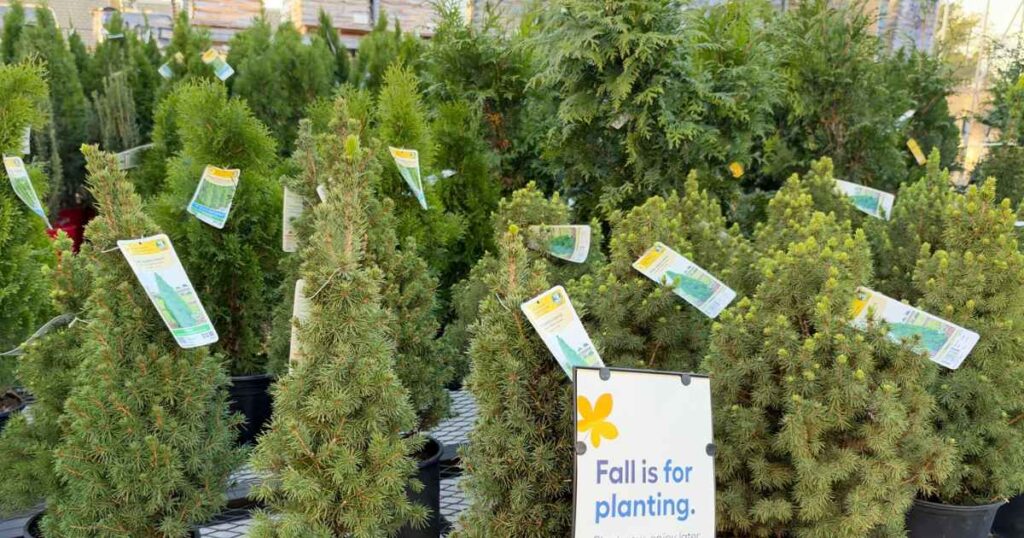
I spotted several evergreen trees at Lowe’s, including upright conifers that could potentially be used for privacy screening or foundation landscaping.
These were some of the plants I would be most cautious about purchasing so late in the season.
Evergreens keep their needles or leaves through winter, which means they can continue losing moisture even when temperatures are cold.
If the ground freezes before newly planted evergreens establish sufficient roots, they may struggle to replace that lost moisture. This can result in winter burn, browning, or even plant death.
Iowa State University Extension cautions that evergreens planted in late October or November may not establish adequately before winter.
In colder regions, I would generally pass on large clearance evergreens in November unless I had a suitable plan for planting and protecting them.
A 50% discount isn’t much of a bargain if the tree doesn’t survive until spring.
Some Clearance Shrubs May Be Worth Considering
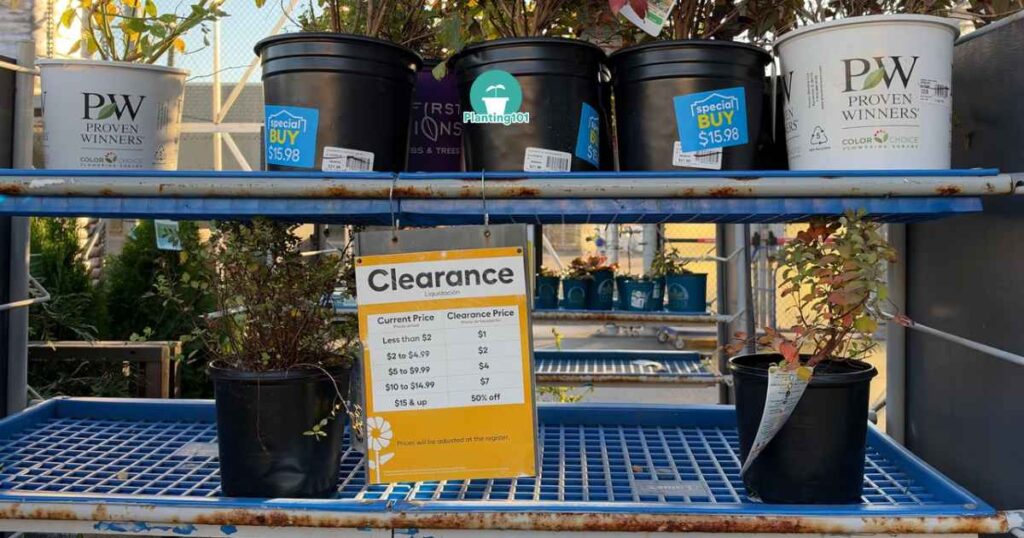
Not every clearance shrub is a bad purchase in November.
Certain hardy deciduous shrubs can tolerate late-fall planting better than evergreens, provided the soil remains workable and conditions are suitable.
However, I’d still check a few things before purchasing.
First, make sure the shrub is hardy in your USDA planting zone. A plant that struggles with your typical winter temperatures won’t become a better choice just because it’s discounted.
Second, check the roots. Container-grown plants can become root-bound after sitting in nursery pots for a long time.
Finally, consider how much time the plant has to establish before winter. A shrub planted in early September has a significant advantage over one planted in late November.
If you’re in a region where winter arrives early, saving your money until spring may be the smarter decision.
5 Things to Check Before Buying Clearance Plants
Before buying any discounted plant, I would take a few minutes to inspect it carefully.
1. Check the Leaves and Branches
Look for healthy foliage and sturdy branches.
A few damaged leaves aren’t necessarily a dealbreaker, but widespread browning, blackened stems, or extensive dieback could indicate a more serious problem.
Keep in mind that deciduous plants naturally lose their leaves in fall. Bare branches aren’t automatically a sign that a plant is dead.
2. Inspect the Roots
If the store allows it, gently inspect the root ball.
Healthy roots should generally look firm, and the plant shouldn’t be sitting in a container filled with rotting, foul-smelling roots.
Watch for thick roots circling tightly around the inside of the pot. These can interfere with healthy root development, especially in trees.
The University of Illinois Extension recommends checking root health and looking for signs of plants becoming severely root-bound before purchasing.
3. Look for Pests and Disease
Check both sides of the leaves and examine stems and branches.
Avoid plants with obvious pest infestations, suspicious spots, unusual growths, or extensive disease damage.
A discounted plant shouldn’t introduce problems into the rest of your garden.
4. Make Sure the Plant Is Right for Your Climate
Check the plant tag for its USDA hardiness zones, sunlight needs, mature size, and growing requirements.
Just because a plant is available at a local garden center doesn’t guarantee it’s the right choice for every yard.
Also consider your soil drainage, sun exposure, and available space.
5. Decide Whether You Can Plant It Right Away
This is especially important in November.
If you buy a large shrub but don’t have time to plant it before the ground freezes, keeping it alive through winter becomes another project.
Container-grown roots are more exposed to freezing temperatures than roots protected in the ground.
Unless you’re prepared to provide appropriate winter protection, I’d avoid buying plants that will sit in their nursery pots outdoors all winter.
How to Help Late-Fall Plantings Survive Winter
If you do decide to take advantage of a clearance sale, proper planting and care become especially important.
Choose a location with suitable drainage and sunlight, and avoid planting when the soil is frozen or waterlogged.
When planting a tree or shrub, make sure the root flare is at the correct level rather than burying the trunk too deeply.
After planting, water thoroughly.
Newly planted trees and shrubs need sufficient moisture as they enter winter. The University of Connecticut’s November gardening recommendations emphasize watering trees, shrubs, and recently planted evergreens until a hard frost.
Mulch can also help moderate soil temperatures and conserve moisture. Keep mulch away from trunks and stems rather than piling it directly against them.
Avoid encouraging tender new growth with high-nitrogen fertilizer this late in the season.
Even with careful planting, late-season purchases carry additional risk. Weather conditions, plant species, and local climate all affect how successfully a new plant establishes.
Should You Buy Plants on Clearance at Lowe’s in November?
My advice is to be selective.
A healthy, cold-hardy deciduous shrub may be worth considering if you live somewhere with a relatively mild late fall and can plant it immediately.
But I would be much more hesitant about purchasing evergreen trees or broadleaf evergreens in November, particularly in regions with freezing winters.
And I would skip anything that looks severely damaged, diseased, or excessively root-bound, regardless of how low the price is.
There’s definitely something satisfying about finding a landscaping bargain. But the real savings come when that discounted plant survives and thrives in your garden.
My Advice
I love checking garden center clearance sections because you never know what you’ll find.
The 50% off signs at Lowe’s were tempting, especially on some of the larger trees and shrubs that would normally cost considerably more.
But after looking at what was available, I wouldn’t automatically buy everything just because it was half price.
For me, the best clearance plant is one that’s healthy, suited to my climate, and likely to survive long after the sale ends.
And sometimes, the best deal is simply waiting until spring.
Is November Too Late to Plant Trees and Shrubs? Here’s What You Can Still Plant
I recently stopped by Home Depot and Lowe’s in November and was surprised to see…
Cacti and Succulents at Home Depot: Best for Beginners
I stopped by Home Depot’s garden center recently and couldn’t believe how many cacti and…
15 Plants I Found at Home Depot in November
I stopped by Home Depot’s garden center in November, and I was surprised by how…
Lowe’s Plant Clearance: Are 50% Worth Buying in November?
I stopped by Lowe’s garden center and spotted something that immediately caught my attention: plants…
11 Beautiful Flowers to Plant in Fall for an Easy Garden Next Year
If you want a beautiful garden next year without doing a lot of work, fall…
10 Fall Hosta Mistakes to Avoid When Cutting Them Back
By October, hostas can start looking tired and unruly. The leaves may be full of…