
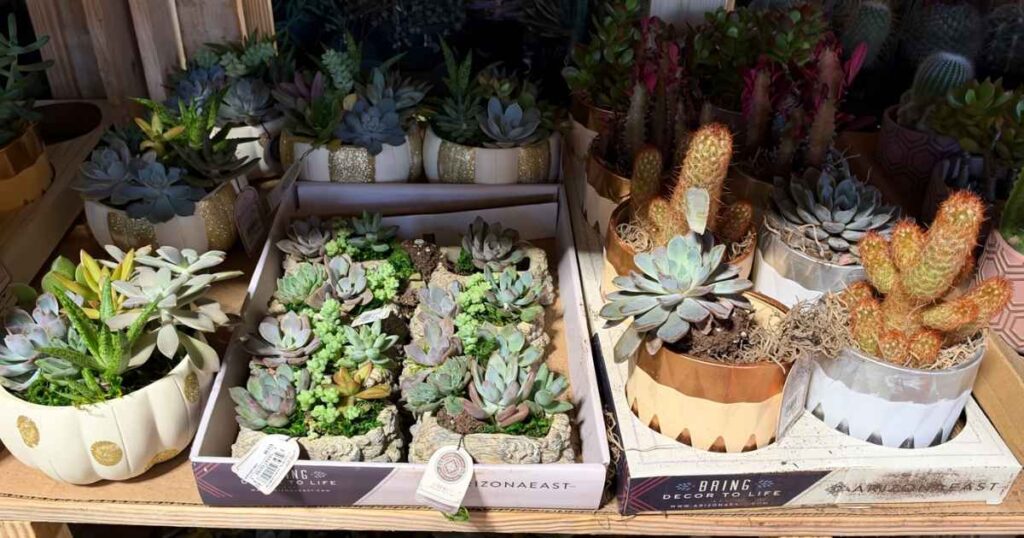
I stopped by Home Depot’s garden center recently and couldn’t believe how many cacti and succulents they had for sale!
There were shelves filled with tiny succulents, colorful decorative pots, fuzzy-looking cacti, and some surprisingly large cactus varieties.
I originally went to see what plants Home Depot was selling in November, but I ended up spending quite a bit of time looking at the cactus and succulent displays.
Some of the plants were so cute that I could easily imagine buying several and arranging them together on a sunny windowsill.
But while cacti and succulents are often advertised as easy houseplants, not all of them are equally beginner-friendly.
Some need much more sunlight than you might expect, and others can be surprisingly easy to kill if you water them too often.
Here are the cacti and succulents that caught my eye at Home Depot, along with the ones I’d consider buying and what I’d check before bringing them home.
1. Miniature Succulent Arrangements
One of the first displays that caught my attention was a collection of miniature succulents arranged in decorative containers.
There were tiny plants with thick leaves, interesting textures, and different shades of green.
Some were arranged together in small ceramic pots, making them look like ready-made gifts.
I really liked these because you could easily put one on a desk, shelf, or windowsill without needing much space.
However, I’d be careful about buying succulents based only on how cute the container looks.
Some decorative pots don’t have drainage holes, which can make it difficult to keep succulents healthy.
If I were buying one, I’d check whether the plant could be removed from its decorative container for watering.
Would I buy it? Yes, but only if the plants are healthy and the container allows proper drainage.
2. Rosette-Shaped Succulents
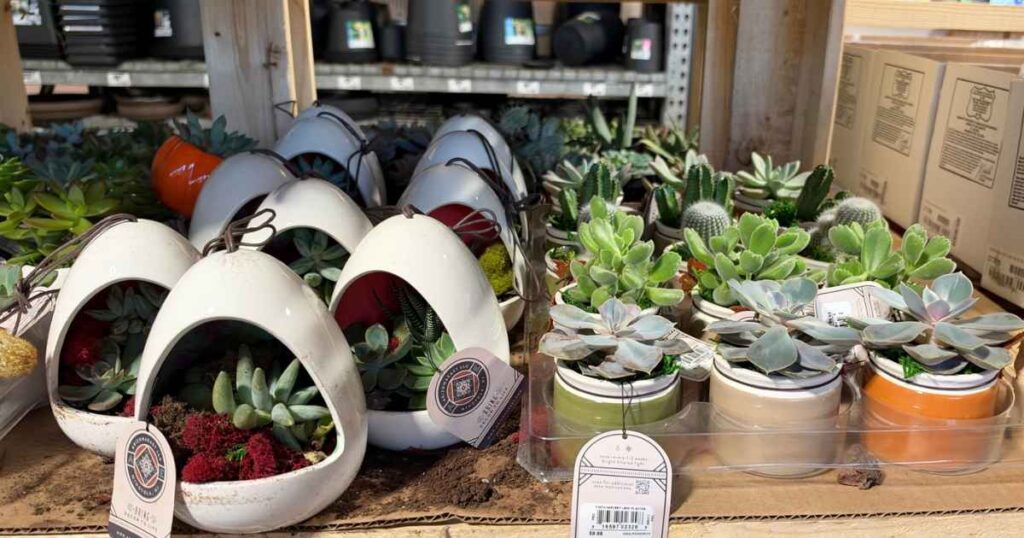
I spotted several beautiful succulents with leaves arranged in tight rosettes.
Some resembled Echeveria, a popular succulent known for its flower-like appearance.
I love the look of these plants because they’re so symmetrical. They almost look like little green flowers.
Some varieties also develop pink, purple, or bluish tones when grown in suitable light conditions.
But Echeverias aren’t always as easy to grow indoors as people assume.
They generally need plenty of bright light to maintain their compact shape. Without enough light, their stems can stretch, and the leaves may spread farther apart.
This is especially important during winter when daylight hours are shorter.
If you don’t have a very sunny window, you might need a grow light to keep them looking their best.
Would I buy it? Yes, if I had a sunny spot available. Otherwise, I’d choose a more forgiving succulent.
3. Small Jade Succulents
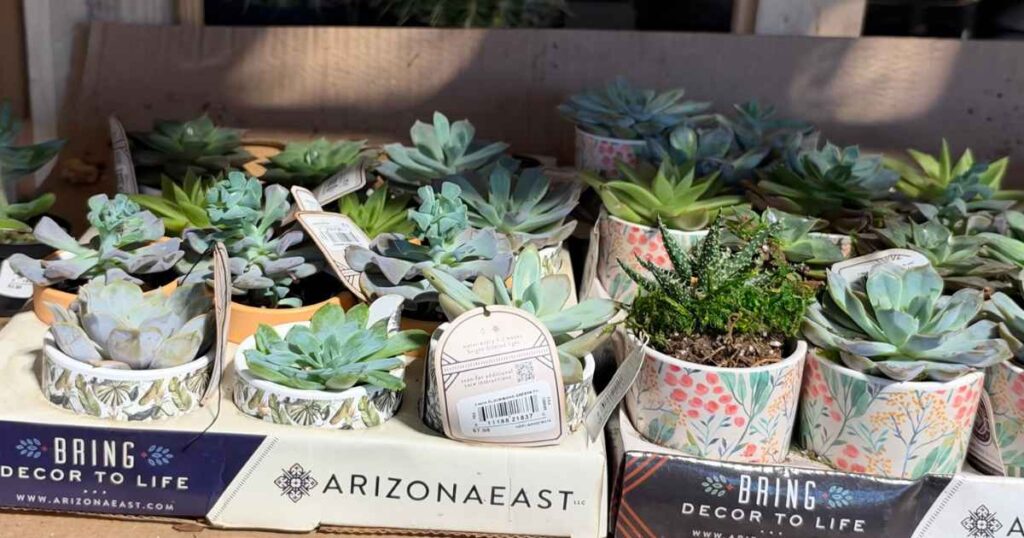
Jade plants are popular houseplants because they can live for years and eventually develop woody, tree-like stems.
I like that they have a different appearance from the rosette-shaped succulents.
They’re also relatively easy to maintain when given enough light and proper watering.
The biggest mistake I’d avoid is keeping the soil constantly moist.
Jade plants store water in their leaves, so they generally prefer the soil to dry between waterings.
They also need a container with drainage holes and a well-draining potting mix.
Would I buy it? Yes. A healthy jade plant would be one of my preferred choices for a beginner with a bright window.
4. Haworthia Succulents
Haworthias are another good choice for beginners. It’s small, spiky succulents with thick, pointed leaves arranged in compact clusters.
These are the kinds of succulents I’d look at first if I wanted something small and relatively easy to maintain indoors.
Unlike some sun-loving succulents, many Haworthia varieties can tolerate bright, indirect light and don’t require hours of intense direct sunlight.
That makes them a potentially better choice for homes without a perfect south-facing window.
However, they still need good drainage and should never sit in waterlogged soil.
I also like that they stay relatively compact.
Would I buy it? Definitely worth considering, especially for someone who wants a small succulent but doesn’t have extremely bright light.
5. Aloe Succulents
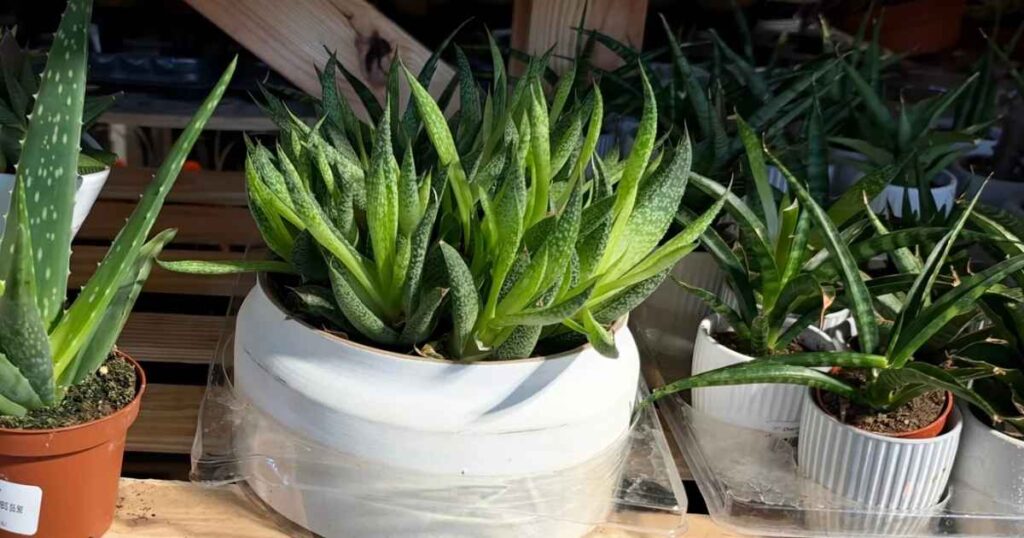
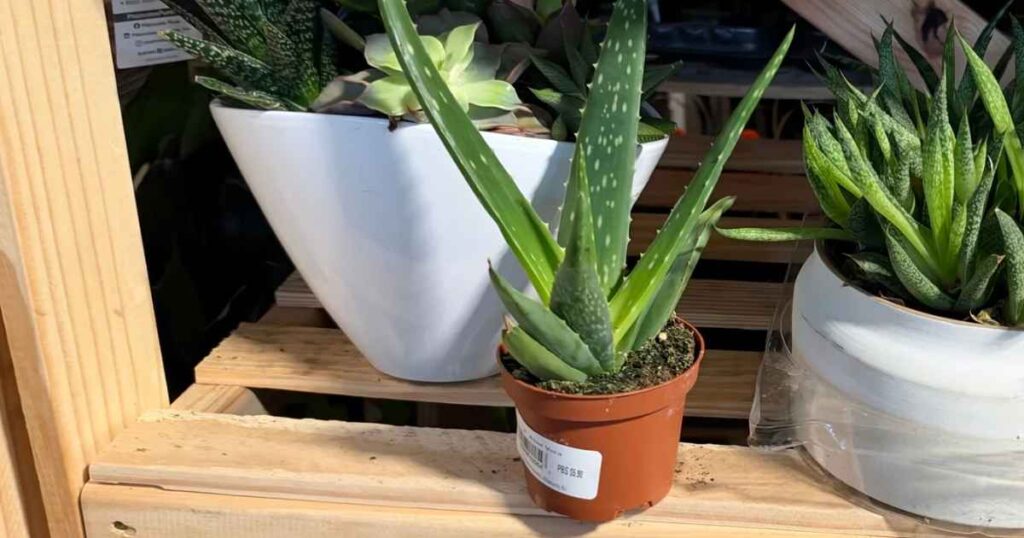
Aloe plants can make attractive indoor houseplants, particularly when placed near a bright window.
Aloe plants are upright succulents with long, pointed, fleshy leaves.
Some can eventually become much larger than their nursery pots suggest.
Would I buy it? Yes, Aloe plants are beginner-friendly.
6. Small Round Cacti
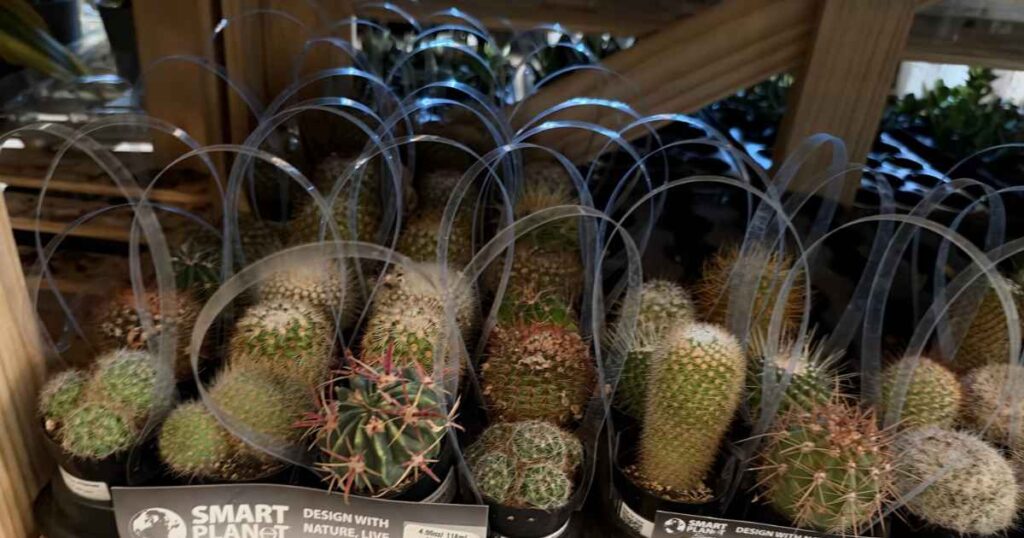
Home Depot had a large selection of small, round cacti in nursery pots.
Some were covered in fine-looking spines, while others had longer, more noticeable spines.
These would be fun to collect because every variety has such a different appearance.
I can see them looking great arranged together on a sunny windowsill.
However, I wouldn’t assume that all small cacti are easy indoor plants.
Many desert cacti need strong light to grow properly, and they can deteriorate if they’re kept in dim conditions.
Overwatering is another common problem.
If I were buying one, I’d check that the cactus feels firm, looks healthy, and isn’t sitting in soggy soil.
Would I buy it? Yes, if I had a very bright location and didn’t mind handling a plant with spines.
7. Tall Columnar Cacti
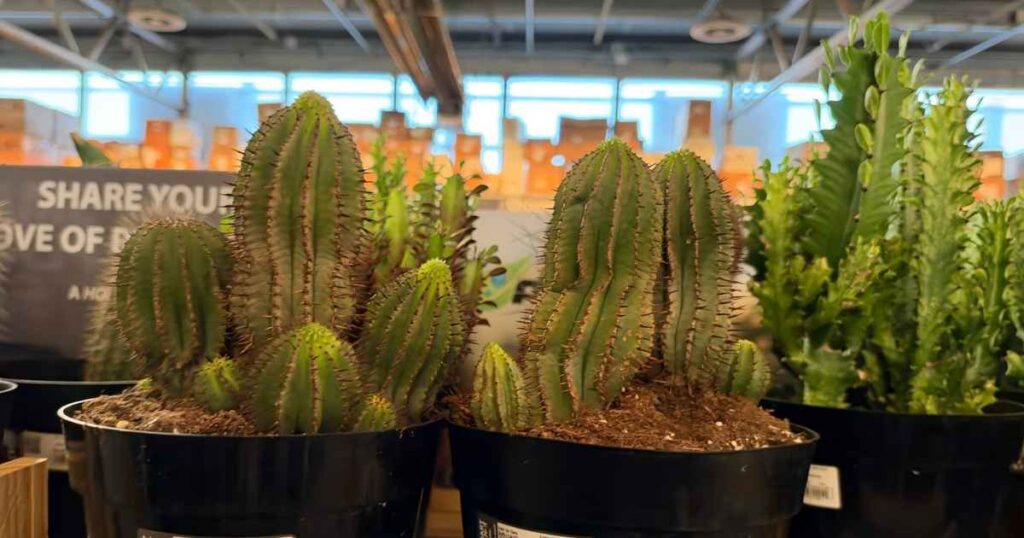
Some of the most impressive plants I spotted were the tall, upright cacti.
These looked completely different from the little round varieties.
I liked their sculptural appearance and could imagine using one as a statement plant in a sunny room.
However, I would definitely check the mature size before purchasing.
Some columnar cacti can become quite large over time, even when grown in containers.
They also need sufficient light, and their spines can make repotting or moving them difficult.
I wouldn’t buy one without thinking about where it would go as it grows.
Would I buy it? Maybe. I love the look, but I’d prefer to start with a smaller specimen unless I had a dedicated spot for it.
8. Golden Barrel Cacti
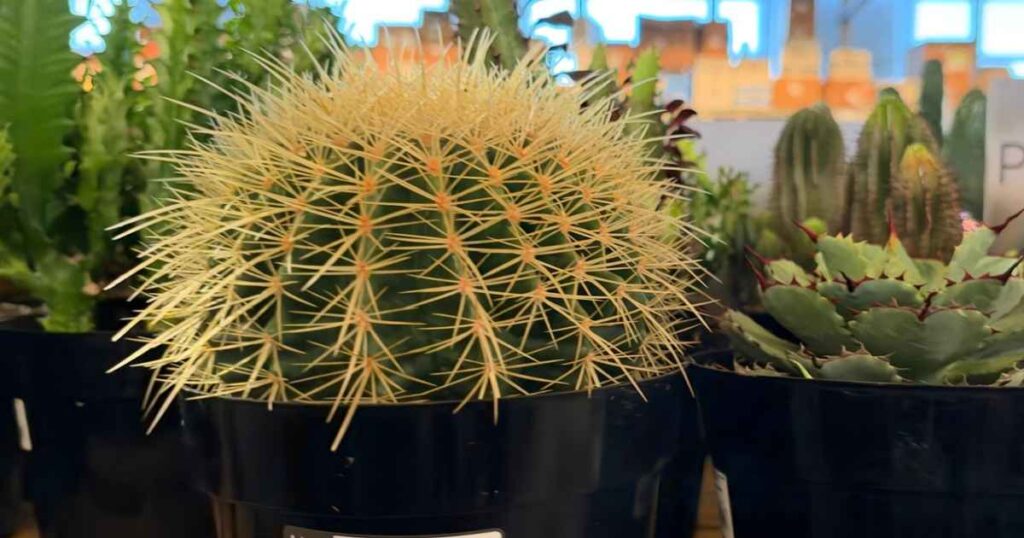
One of the cacti that really stood out was a large, rounded specimen covered in prominent golden-colored spines.
I love how dramatic these golden barrel cactus look. Their round shape and radiating spines make them almost like living sculptures.
But this wouldn’t be my first recommendation for someone buying their first cactus.
Golden barrel cacti need strong light and can eventually become quite large.
They’re also covered in sharp spines, which makes placement especially important.
I wouldn’t put one where someone could easily brush against it.
Would I buy it? I would consider it for a very sunny area, but not for a narrow shelf or busy walkway.
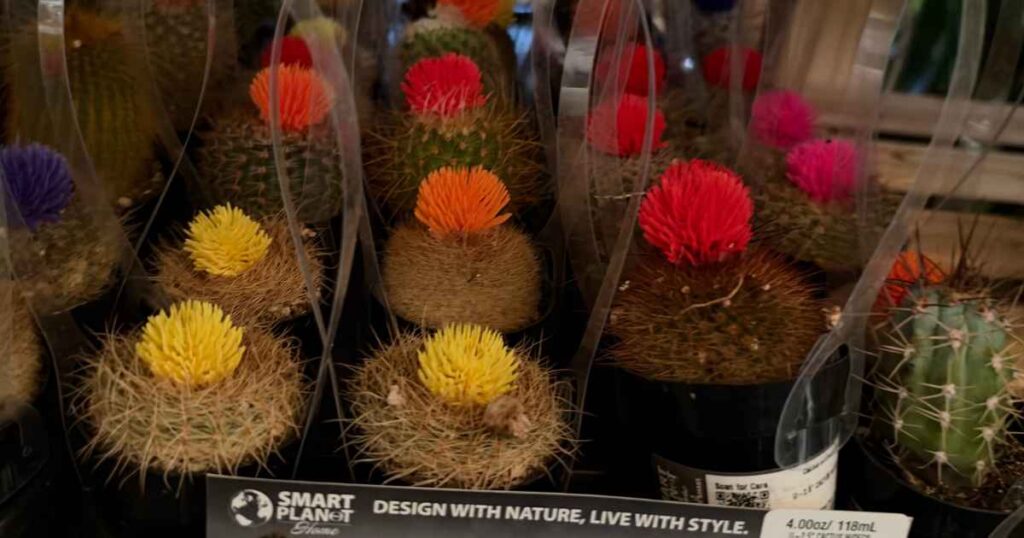
9. Cacti With Colorful Decorations
These were definitely some of the most eye-catching plants at Home Depot!
I spotted little cacti with bright pink, orange, yellow, purple, and red decorations attached to the tops.
They stood out immediately against the green cactus bodies.
But here’s something shoppers should know: those colorful decorations are not necessarily real cactus flowers.
Some retailers sell cacti with artificial flowers or other decorations attached to make them look more colorful.
I would personally prefer a cactus in its natural form.
Artificial decorations can be misleading if you’re expecting the plant to continue producing those colorful flowers.
Before buying one, I’d take a closer look at how the decorations are attached and whether they’re damaging the plant.
Would I buy it? I’d skip the decorated versions and choose an undecorated cactus instead.
10. Mixed Succulent Trays
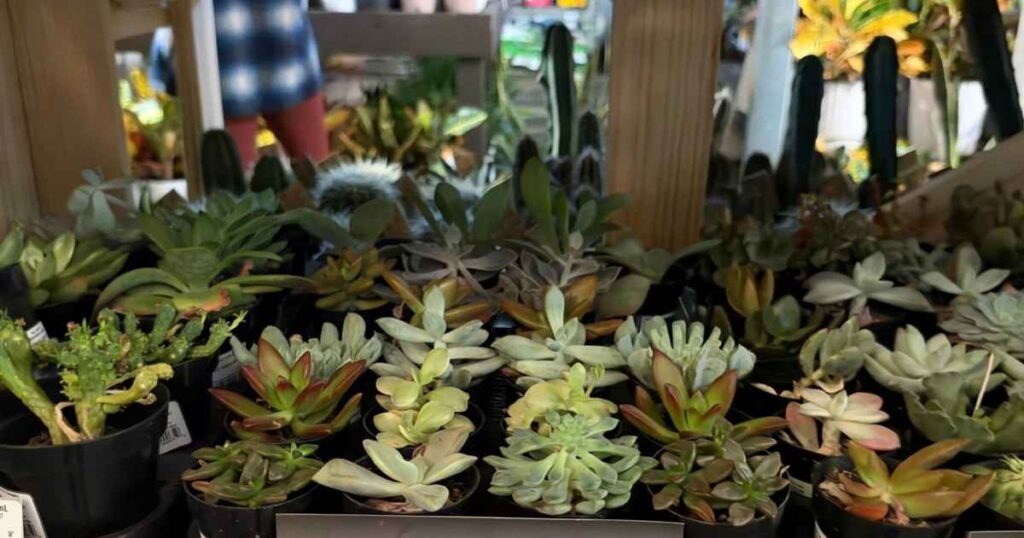
I spotted several trays containing assorted small succulents.
These were among my favorite displays because there were so many shapes and colors to choose from.
I could see buying several individual plants and arranging them in matching pots for a windowsill display.
But I wouldn’t necessarily plant them all together.
While many succulents have similar watering needs, their light requirements can differ.
One type might need several hours of direct sunlight, while another prefers bright, indirect light.
Keeping them in individual pots makes it easier to adjust their care.
Would I buy it? Yes. I’d choose a few healthy plants with similar growing requirements rather than buying a random assortment just because they look pretty together.
What to Check Before Buying Cacti and Succulents at Home Depot
After seeing all these different varieties, I realized how easy it would be to fill a shopping cart with little plants.
But before buying, I’d check a few things.
Make Sure the Plant Is Healthy
Look for firm leaves or stems, healthy coloring, and a stable plant base.
Avoid plants that are mushy, collapsing, or showing extensive signs of rot.
A few dry lower leaves aren’t necessarily a problem, but widespread damage should make you cautious.
Check for Pests
Inspect the leaves, stems, and areas where leaves join together.
Mealybugs can hide in tight spaces and appear as small, white, cottony clusters.
I’d avoid bringing home an obviously infested plant, even if it’s discounted.
Look at the Pot
I would always check whether the pot has drainage holes.
Succulents and cacti generally need a potting mix that drains well.
A decorative container can be beautiful, but if water can’t escape, the roots may stay wet for too long.
Think About Your Home’s Lighting
This is probably the biggest thing I’d consider.
A plant that looks perfect under garden center lighting might struggle in a dark corner at home.
Many cacti and succulents need much brighter light than typical houseplants.
If you don’t have an appropriate window or grow light, choose a plant better suited to your conditions.
Don’t Overwater
One of the biggest mistakes people make with succulents is watering them too often.
These plants store water in their fleshy leaves or stems and generally don’t need the same watering routine as tropical houseplants.
Water thoroughly when appropriate, but let the potting mix dry out between waterings.
During winter, many types need even less frequent watering because they’re growing more slowly.
Which Home Depot Cacti and Succulents Would I Buy?
If I were choosing from the displays I saw, I’d start with a small Haworthia succulent or a healthy jade plant.
They’re attractive, relatively compact, and can be good choices for beginners when their basic care requirements are met.
I’d also consider a rosette-shaped succulent like Echeveria, but only if I had enough sunlight to keep it healthy.
The larger cacti were beautiful, but I’d think carefully before bringing one home.
And I’d probably skip the cacti with artificial colorful decorations.
For me, the best plant isn’t necessarily the most unusual one. It’s the one that’s going to look just as good several months after I bring it home.
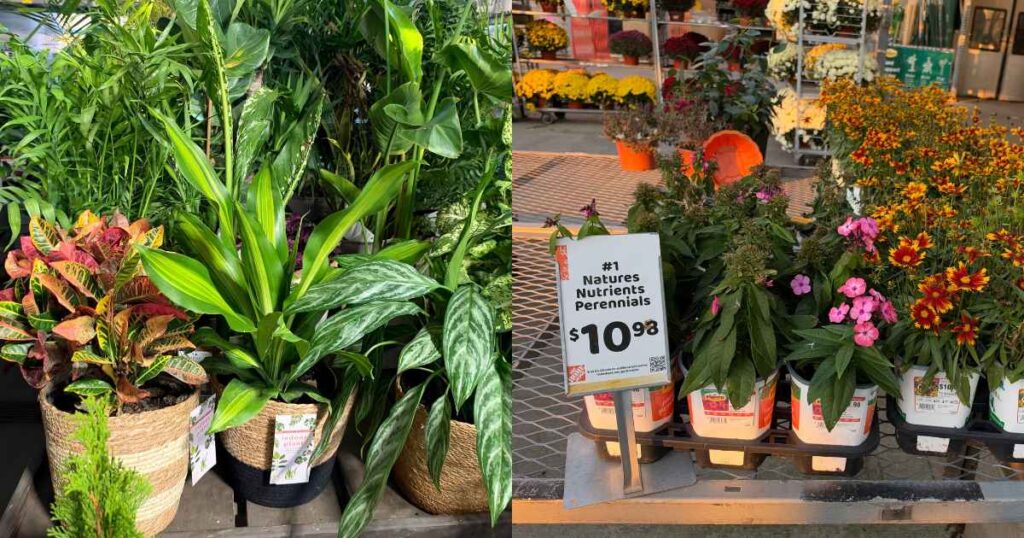
15 Plants I Found at Home Depot in November
I stopped by Home Depot’s garden center in November, and I was surprised by how…
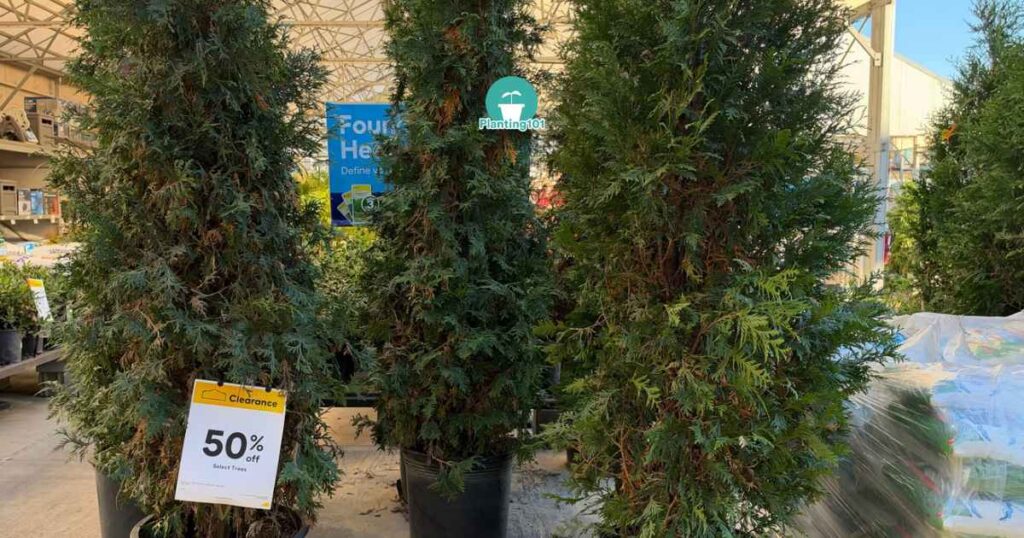
Lowe’s Plant Clearance: Are 50% Worth Buying in November?
I stopped by Lowe’s garden center and spotted something that immediately caught my attention: plants…

How to Take Care of Your Haworthia maughanii (Infographic)
Haworthia maughanii is a unique looking succulent with flat-top leaves. The leaves of Haworthia maughanii…

How to Take Care of Your Haworthia attenuata (Infographic)
Haworthia attenuata is a beautiful looking succulent with dark green leaves and white stripes. It…

How to Take Care of Your Haworthia pumila (Infographic)
Haworthia pumila or Pearl Plant is an attractive looking succulent with dark green triangular shaped…